| Title |
Kenneth W. Baldridge, Pleasant Grove, Utah: an interview by Becky B. Lloyd, April 30, 2005: Saving the Legacy tape no. 723 |
| Alternative Title |
Kenneth W. Baldridge, Saving the legacy: an oral history of Utah's World War II veterans, ACCN 2070, American West Center, University of Utah |
| Creator |
Baldridge, Kenneth W., 1926- |
| Contributor |
Lloyd, Becky B.; University of Utah. American West Center |
| Publisher |
Digitized by J. Willard Marriott Library, University of Utah |
| Date |
2005-04-30 |
| Date Digital |
2015-12-16 |
| Access Rights |
I acknowledge and agree that all information I obtain as a result of accessing any oral history provided by the University of Utah's Marriott Library shall be used only for historical or scholarly or academic research purposes, and not for commercial purposes. I understand that any other use of the materials is not authorized by the University of Utah and may exceed the scope of permission granted to the University of Utah by the interviewer or interviewee. I may request permission for other uses, in writing to Special Collections at the Marriott Library, which the University of Utah may choose grant, in its sole discretion. I agree to defend, indemnify and hold the University of Utah and its Marriott Library harmless for and against any actions or claims that relate to my improper use of materials provided by the University of Utah. |
| Spatial Coverage |
San Diego, San Diego County, California, United States |
| Subject |
Baldridge, Kenneth W., 1926- --Interviews; Veterans--United States--Biography; World War, 1939-1945--Personal narratives, American; World War, 1939-1945--Naval operations, American |
| Keywords |
Great Depression; Aircraft Warning System; Naval Reserve; V12; Signalmen |
| Description |
Transcript (39 pages) of an interview by Becky B. Lloyd with Kenneth W. Baldridge on April 30, 2005. From tape number 723 in the "Saving the Legacy" Oral History Project |
| Collection Number and Name |
Accn2070, Saving the Legacy oral history project, 2001-2010 |
| Abstract |
Baldridge (b. 1926) was born in Modesto, California and describes growing up in the Depression. He joined the Aircraft Warning System of the Ground Observers Corps prior to enlisting in the Navy in December of 1943. He attended the College of the Pacific and University of California at Berkeley in the Naval ROTC program. He was sent to Great Lakes Naval Training Center for boot camp, then attended signal school. He was assigned to the USS Rendova, a CVE-114 based in San Diego as a training vessel. Discharged in 1946, Baldridge stayed in the reserves for eight years. His civilian career was as a professor of history. Interviewed by Becky Lloyd. 39 pages. |
| Type |
Text |
| Genre |
oral histories (literary works) |
| Format |
application/pdf |
| Extent |
39 pages |
| Language |
eng |
| Rights |
 |
| Scanning Technician |
Mazi Rakhsha |
| Conversion Specifications |
Original scanned with Kirtas 2400 and saved as 400 ppi uncompressed TIFF. PDF generated by Adobe Acrobat Pro X for CONTENTdm display |
| ARK |
ark:/87278/s6qr705h |
| Topic |
Personal narratives--American; Veterans; World War (1939-1945); Military operations, Naval--American |
| Setname |
uum_slohp |
| ID |
1027949 |
| Reference URL |
https://collections.lib.utah.edu/ark:/87278/s6qr705h |
| Title |
Page 34 |
| Format |
application/pdf |
| Setname |
uum_slohp |
| ID |
1027943 |
| OCR Text |
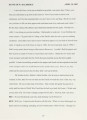
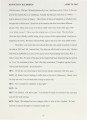
Show TH W. B LDRIDG PRI 0 200 BE : Will you tell us a little about your career? KEN: Well when I got my teaching ... when I was pursuing my teaching cr d ntial at th College of the Pacific, I commuted from Modesto. We were living in Modesto and I traveled to Stockton; I went to my classes three days a week. Sometimes I d have to travel four. I didn't have to travel to Stockton for my student teaching. I was able get a job at a junior high school. I hadn't figured on junior high but they worked that out in Modesto. So I did my student teaching there. I enjoyed it very much. I had a great principal and great supervising teacher. So then I started looking for a job in the high schools up and down the valley and couldn't find anything. One day my principal, who'd been very patient through all of this said, "Well, if you're through looking, you can stay here." I liked that idea. "Well, okay." It was great. I spent three years there, 1950-1953, during which time they opened up a new school and tore the old one down. Then I had a chance to go over to one of the newer high schools, Downey High School. So I taught there for seven years. Then we had the opportunity to go to New Zealand to teach for the (LDS) Church. I taught at what was called the Church College of New Zealand. In the British vernacular, high school is called college. So it was a Church high school. I went down there with the idea of staying for four (years). It was so enjoyable, we stayed for six years before coming back. I was given the opportunity then of coming to BYU to work on my doctorate. Getting my masters was such a traumatic experience and took me so long, I decided that I didn't want any more degrees. But the Church Commissioner of Education, a fellow named Harvey Taylor, said that they would help me. They'd pay my tuition and give me a part-time job and really made it sound quite inviting to get my doctorate. 34 |
| Reference URL |
https://collections.lib.utah.edu/ark:/87278/s6qr705h/1027943 |