| Title |
William M. Sanderlin, Layton, Utah: an interview by Winston Erickson, 27 June 2002: Saving the Legacy tape no. 457 |
| Alternative Title |
William M. Sanderlin, Saving the legacy: an oral history of Utah's World War II veterans, ACCN 2070, American West Center, University of Utah |
| Creator |
Sanderlin, William M., 1921-2004 |
| Contributor |
Erickson, Winston P., 1943-; University of Utah. American West Center |
| Publisher |
Digitized by J. Willard Marriott Library, University of Utah |
| Date |
2002-06-27 |
| Date Digital |
2015-12-16 |
| Access Rights |
I acknowledge and agree that all information I obtain as a result of accessing any oral history provided by the University of Utah's Marriott Library shall be used only for historical or scholarly or academic research purposes, and not for commercial purposes. I understand that any other use of the materials is not authorized by the University of Utah and may exceed the scope of permission granted to the University of Utah by the interviewer or interviewee. I may request permission for other uses, in writing to Special Collections at the Marriott Library, which the University of Utah may choose grant, in its sole discretion. I agree to defend, indemnify and hold the University of Utah and its Marriott Library harmless for and against any actions or claims that relate to my improper use of materials provided by the University of Utah. |
| Spatial Coverage |
England, United Kingdom; Italy |
| Subject |
Sanderlin, William M., 1921-2004-Interviews; Veterans--Utah--Biography; World War, 1939-1945--Personal narratives, American; World War, 1939-1945--Aerial operations, American; World War, 1939-1945--Campaigns--Europe, Southern--Personal narratives, American |
| Keywords |
Army Air Corps; Aerial gunners; Ball turret gunners |
| Description |
Transcript (35 pages) of an interview by Winston Erickson with William M. Sanderlin on [June 27, 2002. From tape number 457 in the "Saving the Legacy" Oral History Project |
| Collection Number and Name |
Accn2070, Saving the Legacy oral history project, 2001-2010 |
| Abstract |
Sanderlin (1921-2006) shares his experiences of growing up in Texas, including his school history. He speaks of moving to Los Angeles, California with his mother when he was a teenager. He was working for the railroad, a critical industry, when he decided to enlist. He enlisted in the US Army in 1942 and was sent to the Air Corps. He became an aerial gunner and survived 35 missions flown in B-24 bombers. Interviewed by Winston Erickson. 35 pages. |
| Type |
Text |
| Genre |
oral histories (literary works) |
| Format |
application/pdf |
| Extent |
35 pages |
| Language |
eng |
| Rights |
 |
| Scanning Technician |
Mazi Rakhsha |
| Conversion Specifications |
Original scanned with Kirtas 2400 and saved as 400 ppi uncompressed TIFF. PDF generated by Adobe Acrobat Pro X for CONTENTdm display |
| ARK |
ark:/87278/s62r5tsv |
| Topic |
Personal narratives--American; Veterans; World War (1939-1945); Military operations, Aerial--American |
| Setname |
uum_slohp |
| ID |
1027767 |
| Reference URL |
https://collections.lib.utah.edu/ark:/87278/s62r5tsv |
| Title |
Page 6 |
| Format |
application/pdf |
| Setname |
uum_slohp |
| ID |
1027735 |
| OCR Text |
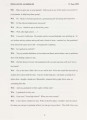
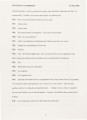
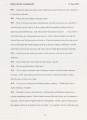
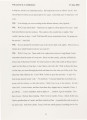
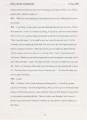
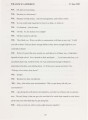
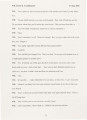
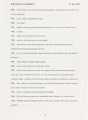
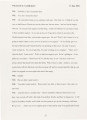
Show WILLIAM M. SANDERLIN 27 June 2002 WS: My top grade was arithmetic, and I had a ninety-eight percent on that. WE: That was good! WS: But it never has done me a whole latta good [laugh]. WE: [laugh] Okay, you went to high school, you played football. What else did you do for entertainment? Did you have a lot of class activities? WS: I don't recall any other activities outside of just normal play for kids. WE: But football-when you were in high school you played football. WS: I played football, and then we didn't have a baseball team. They had volleyball and I wasn't interested in that at all, so . . . WE: So you just played football. WS: I fooled around and got me a job-that was during the Depression, see. So I managed to get me a job sweeping out a little shoe repair place. Twenty-five cents a day [laugh]. Of course it only took about an hour and a half to get it cleaned down. WE: Well that was good wages-an hour and a half for twenty-five cents. WS: Yes. Well, you didn't figure it that way because the average wage at those times-a lot of the kids that were graduating just ahead of me moved to Houston, Texas, which is about a hundred miles away. They moved to Houston to work in these outdoor food processing-not processing, but ... vegetables and fruits and- fruit stands. And they were getting eighteen dollars a week. And that was pretty good, so as soon as they graduated they headed for Houston-or San Antonio, or one of the big towns. Me, I just stayed around there, and we had a rural passenger train that came through there twice a day, early morning and early afternoon. And there's a little restaurant across the street, and they hired me to take sandwiches onboard the train like the porters do now. And I 5 |
| Reference URL |
https://collections.lib.utah.edu/ark:/87278/s62r5tsv/1027735 |