| Title |
Gerald A. Corwin, Salt Lake City, Utah: an interview by Winston Erickson, October 9, 2000: Saving the Legacy tape no. 119 |
| Alternative Title |
Gerald A. Corwin, Saving the legacy: an oral history of Utah's World War II veterans, ACCN 2070, American West Center, University of Utah |
| Creator |
Corwin, Gerald A., 1913- |
| Contributor |
Erickson, Winston P., 1943-; University of Utah. American West Center |
| Publisher |
Digitized by J. Willard Marriott Library, University of Utah |
| Date |
2000-10-09 |
| Date Digital |
2015-12-16 |
| Access Rights |
I acknowledge and agree that all information I obtain as a result of accessing any oral history provided by the University of Utah's Marriott Library shall be used only for historical or scholarly or academic research purposes, and not for commercial purposes. I understand that any other use of the materials is not authorized by the University of Utah and may exceed the scope of permission granted to the University of Utah by the interviewer or interviewee. I may request permission for other uses, in writing to Special Collections at the Marriott Library, which the University of Utah may choose grant, in its sole discretion. I agree to defend, indemnify and hold the University of Utah and its Marriott Library harmless for and against any actions or claims that relate to my improper use of materials provided by the University of Utah. |
| Spatial Coverage |
Huntsville, Madison County, Alabama, United States; Hawaii; Philippines |
| Subject |
Corwin, Gerald A., 1913- --Interviews; Veterans--Utah--Biography; World War, 1939-1945--Personal narratives, American; World War, 1939-1945--Military operations, American |
| Keywords |
Chemical weapons; Redstone Arsenal |
| Description |
Transcript (33 pages) of an interview by Winston Erickson with Gerald A. Corwin on October 9, 2000. From tape number 119 in the "Saving the Legacy" Oral History Project |
| Collection Number and Name |
Accn2070, Saving the Legacy oral history project, 2001-2010 |
| Abstract |
Corwin (b. 1913) was born in Hardin, Montana. He graduated from Montana State University in 1937 with a degree in chemistry. While in college he joined the National Guard for help with the cost of college. After college, he went to work for the Yale Oil Corporation in South Dakota. Although still in the inactive National Guard at the time of Pearl Harbor, he wasn't called up, but enlisted in the army. He went to Ft. Lewis, Washington, applied for and was accepted into Officer Candidate School (OCS). He was commissioned in 1942 and was assigned to the chemical warfare service, Redstone Arsenal in Alabama. He was there for 20 months, applied for the infantry, and returned to Ft. Lewis to train troops. He was headed to the infantry, in fact, had arrived in Hawaii when the peace treaty was signed and the war was over. He was sent to the Philippines and left the service on meeting the time-in-service requirements. Interviewed by Winston Erickson. 33 pages. |
| Type |
Text |
| Genre |
oral histories (literary works) |
| Format |
application/pdf |
| Extent |
33 pages |
| Language |
eng |
| Rights |
 |
| Scanning Technician |
Mazi Rakhsha |
| Conversion Specifications |
Original scanned with Kirtas 2400 and saved as 400 ppi uncompressed TIFF. PDF generated by Adobe Acrobat Pro X for CONTENTdm display |
| ARK |
ark:/87278/s6zw3p0k |
| Topic |
Personal narratives--American; Veterans; World War (1939-1945) |
| Setname |
uum_slohp |
| ID |
1027729 |
| Reference URL |
https://collections.lib.utah.edu/ark:/87278/s6zw3p0k |
| Title |
Page 24 |
| Format |
application/pdf |
| Setname |
uum_slohp |
| ID |
1027718 |
| OCR Text |
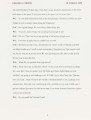
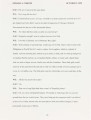
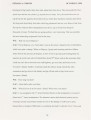
Show GERALD A. CORWIN B R 9, 2000 the war's going to start now,' when they're going to invade Europe. It was a cut off day and I think there were fifteen million of them, something like that. He came to me one day- he's fairly bright in contrast to me, I'd never thought about it-he said, "Jerry we know about when they're going to invade Europe" (laughs). We had to meet the 15th of May and strangely enough, they went into Europe the 6th of June. WE: So three weeks? GAC: Yes. They gave themselves some elbow room, obviously. WE: They were waiting for the proper weather and that sort of thing? GAC: Yes. This is true. That's another thing we made at Huntsville. We made a signal grenade, colored smoke grenades. You see all these people jumping out of airplanes, a helluva lot of them. If you go look at that canister it will say somewhere on it it was filled in Huntsville, Alabama. It will have an "HA" stamped on it somewhere I think; I don't know. I'm guessing. I expect if they're doing any of that sort of thing now they'd be doing it at Redstone, but I don't know. I'm out of that business. I have been retired damn near forty years. On the 61 \ I've been retired thirty four years. WE: So when you got called up for Korea, they sent you where? GAC: I was first at the Chicago Chemical Procurement District, in the city of Chicago. Basically what happened is one day I went about two blocks down the street from the office I'd been going to before with all these coatings, except this day I went to work wearing a soldier's suit. As I say, it's a couple of blocks down the street. In fact, I think I went by the first day or two. WE: Keep living at home? 23 |
| Reference URL |
https://collections.lib.utah.edu/ark:/87278/s6zw3p0k/1027718 |