| Title |
Matthew Williamson, Salt Lake City, Utah: an interview by John C. Worsencroft, October 13, 2009: Saving the Legacy tape no. IA-13, 16 |
| Alternative Title |
Matthew Williamson, Saving the legacy: an oral history of Utah's World War II veterans, ACCN 2070, American West Center, University of Utah |
| Creator |
Williamson, Matthew, 1979- |
| Contributor |
Worsencroft, John C., 1981-; University of Utah. American West Center |
| Publisher |
Digitized by J. Willard Marriott Library, University of Utah |
| Date |
2009-10-13 |
| Date Digital |
2015-12-16 |
| Access Rights |
I acknowledge and agree that all information I obtain as a result of accessing any oral history provided by the University of Utah's Marriott Library shall be used only for historical or scholarly or academic research purposes, and not for commercial purposes. I understand that any other use of the materials is not authorized by the University of Utah and may exceed the scope of permission granted to the University of Utah by the interviewer or interviewee. I may request permission for other uses, in writing to Special Collections at the Marriott Library, which the University of Utah may choose grant, in its sole discretion. I agree to defend, indemnify and hold the University of Utah and its Marriott Library harmless for and against any actions or claims that relate to my improper use of materials provided by the University of Utah. |
| Spatial Coverage |
Kuwait; Iraq |
| Subject |
Williamson, Matthew, 1979- --Interviews; Veterans--Utah--Biography; Iraq War, 2003-2011--Personal narratives, American |
| Description |
Transcript (71 pages) of an interview by John C. Worsencroft with Matthew Williamson on October 13, 2009. From tape numbers IA-13 and 16 in the "Saving the Legacy Oral History Project |
| Collection Number and Name |
Accn2070, Saving the Legacy oral history project, 2001-2010 |
| Abstract |
Williamson (b. 1979) was born in Montpelier, Idaho, and grew up in the nearby small town of Georgetown. Like many kids he grew up playing soldier and decided to join the Marine Corps Reserves after seeing the positive results when a friend returned from boot camp. He was able to navigate through boot camp easily enough but recalls several stories of recruits having rough, but sometimes humorous encounters with drill sergeants. After 9/11 he spent over a year in training as part of a Quick Reaction Force in California's Camp Pendleton. Soon after the QRF mission his unit shipped out to Kuwait. He remembers feeling that the last-minute decision to ship his unit into Iraq in 7-ton trucks, rather than an armored Amtrak, was made because they were Reservists. The remains of enemy vehicles and men littered their path; evidence that air support had cleared much of the heavy resistance away. Soon they were in action; he recalls aiding a pinned down unit, taking sniper and RPG fire, and clearing out an Iraqi Defense Ministry building. He encountered trouble when, during a lighter moment, he donned Republican Guard pants and his flak jacket but was spotted by an NBC reporter who interviewed him for the nightly news. His commanding general saw the video and the end result was that he received a thorough chewing out for the infraction. Later he became very ill from what he believes was the over-chlorinated water they were provided. Returning home felt great but he did have symptoms and was eventually diagnosed with PTSD. He is proud of his mission to remove Saddam from power and has little patience with people that think they have all the answers but who have never served in combat. Interviewed by John C. Worsencroft. 71 pages. |
| Type |
Text |
| Genre |
oral histories (literary works) |
| Format |
application/pdf |
| Extent |
71 pages |
| Language |
eng |
| Rights |
 |
| Scanning Technician |
Mazi Rakhsha |
| Conversion Specifications |
Original scanned with Kirtas 2400 and saved as 400 ppi uncompressed TIFF. PDF generated by Adobe Acrobat Pro X for CONTENTdm display |
| ARK |
ark:/87278/s6r51sv5 |
| Topic |
Personal narratives--American; Veterans; Iraq War (2003-2011) |
| Setname |
uum_slohp |
| ID |
1027107 |
| Reference URL |
https://collections.lib.utah.edu/ark:/87278/s6r51sv5 |
| Title |
Page 13 |
| Format |
application/pdf |
| Setname |
uum_slohp |
| ID |
1027047 |
| OCR Text |
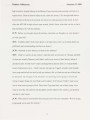
Show Matthew William on o tob r 1 2009 know, I guess I was able to recover mostly from it or whatever, but I didn't want to be held back in the graduation, so I never reported the pain or anything. I just went through it. Then I went to the School oflnfantry in Homo, which is kind of ironic, because that's where I ended up after being called to active duty. After the School of Infantry, which I think physically was much worse than boot camp, it was just nuts. All the boots [23:54] runs, running from range to range. JCW: Did you like the training, though? MW: Yeah, the training was awesome because you get to play with a lot more guns and explosives. That was the stuff that I really loved doing. What I really wanted to do is I would have loved to have gone to sniper school, but being in the Reserve unit here, that wasn't really an option because the closest one was California and they make you pay to fly out there and stuff every month. You don't get paid enough drill pay to make it worth it. But that's probably what I really would have wanted to do. Backing up a little bit, though, to boot camp, I have to kind of explain how I ended up in the infantry from my original MOS of being a field radio operator. So I got to the boot camp and within the first week or two they go over your MOS and everything with you to make sure all of it's correct and that's what you're going to do. I remember it was a master gunnery sergeant, I think it was, a big black guy that was talking to me. He started explaining that a field radio operator is pretty much just a grunt with a big radio on his back (laughs). Big old fifteen-foot antenna saying, "Shoot me." I was like, screw that (laughs). I'll just go straight infantry. So he changed my MOS for me in boot camp from a field radio operator to just 0311. So that's how I ended up being just 0311. It worked out better because I was planning on coming back to Utah after my mission and 12 |
| Reference URL |
https://collections.lib.utah.edu/ark:/87278/s6r51sv5/1027047 |