| Title |
Harold W. Poole, Salt Lake City., Utah: an interview by Winston Erickson, April 3, 2000: Saving the legacy tape no. 197 |
| Alternative Title |
Harold W. Poole, Saving the legacy: an oral history of Utah's World War II veterans, ACCN 2070, American West Center, University of Utah |
| Creator |
Poole, Harold W., 1918-2010 |
| Contributor |
Erickson, Winston P., 1943-; University of Utah. American West Center |
| Publisher |
Digitized by J. Willard Marriott Library, University of Utah |
| Date |
2000-04-03 |
| Date Digital |
2015-09-16 |
| Access Rights |
I acknowledge and agree that all information I obtain as a result of accessing any oral history provided by the University of Utah's Marriott Library shall be used only for historical or scholarly or academic research purposes, and not for commercial purposes. I understand that any other use of the materials is not authorized by the University of Utah and may exceed the scope of permission granted to the University of Utah by the interviewer or interviewee. I may request permission for other uses, in writing to Special Collections at the Marriott Library, which the University of Utah may choose grant, in its sole discretion. I agree to defend, indemnify and hold the University of Utah and its Marriott Library harmless for and against any actions or claims that relate to my improper use of materials provided by the University of Utah. |
| Spatial Coverage |
Philippines; Japan; Salt Lake City, Salt Lake County, Utah, United States |
| Subject |
Patton, Henry Robert, 1919-2007--Interviews; World War, 1939-1945--Personal narratives, American; Veterans--Utah--Biography; Bataan Death March, Philippines, 1942--Personal narratives, American; World War, 1939-1945--Prisoners and prisons, American; Prisoners of war--United States; Prisoners of war--Japan; World War, 1939-1945--Campaigns--Pacific Area--Personal narratives, American |
| Keywords |
ROTC; Army Air Corps; POWs |
| Description |
Transcript (55 pages) of an interview by Winston P. Erickson with Harold W. Poole on April 3, 2000. This is from tape number 197 in the "Saving the Legacy Oral History Project |
| Collection Number and Name |
Accn2070, Saving the Legacy oral history project, 2001-2010 |
| Abstract |
Poole (b. 1918) recalls his childhood in Salt Lake City. He attended West High and was involved in the ROTC program. He volunteered for the Army Air Corps in August 1940 and was sent to the Philippines after training. When the war began his unit fought for four months before being taken prisoner by the Japanese. He survived the Bataan Death March and was in prison camps prior to being sent to Moji, Japan, to work in a steel mill. After the war ended he was evacuated on the ship and made his way home. 55 pages. |
| Type |
Text |
| Genre |
oral histories (literary works) |
| Format |
application/pdf |
| Extent |
55 pages |
| Language |
eng |
| Rights |
 |
| Scanning Technician |
Mazi Rakhsha |
| Conversion Specifications |
Original scanned with Kirtas 2400 and saved as 400 ppi uncompressed TIFF. PDF generated by Adobe Acrobat Pro X for CONTENTdm display |
| ARK |
ark:/87278/s6fj4g28 |
| Topic |
Personal narratives--American; Veterans; World War (1939-1945); Bataan Death March (Philippines : 1942); Prisoners of war |
| Setname |
uum_slohp |
| ID |
1026418 |
| Reference URL |
https://collections.lib.utah.edu/ark:/87278/s6fj4g28 |
| Title |
Page 10 |
| Format |
application/pdf |
| Setname |
uum_slohp |
| ID |
1026371 |
| OCR Text |
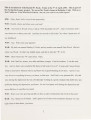
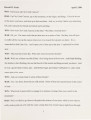
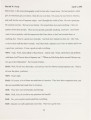
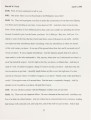
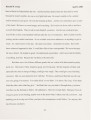
Show Harold W. Poole April3 2001 WIN: You'd managed to survive the depression. You said your dad maintained employment throughout? HAR: Yes. Yes, we did pretty well. WIN: But, still, five dollars a lesson was pretty expensive. HAR: In those days it was a lot of money. WIN: Okay. You joined, and you were sent to what base? Hamilton Field? HAR: Well, Hamilton Field where I got my recruit training. And, incidentally, at the Union Pacific station before I left, my family was all there to see me off. This was in September, just about a week or two after I had volunteered. And I told them--I said, "Now I'll be home for Christmas." This was in September, see, and I figured I could get a leave to come home. And I did, but it was five years later, five years later. WIN: This was in September of 1940? HAR: In 1940. I never saw my parents again, or family, until1945. WIN: So you then went to California, and you had your basic training in Hamilton Field? HAR: Uhhuh. WIN: Did they send you to flight training? HAR: No, I never--I didn't go into the flight end of it. My job ended up being an armament man working with the guns, and gun sites, and that type of thing--the ammunition and so forth. And that was a job that I was interested in doing, so I went into that. And they send us from there over to--when the ship landed in Shanghai we were picking up American nationals because Japan and China had been at war for quite awhile. 9 |
| Reference URL |
https://collections.lib.utah.edu/ark:/87278/s6fj4g28/1026371 |