| Title |
Ray D. Free, Salt Lake City, Utah: an interview by Winston P. Erickson, May 22, 2000: Saving the legacy tape no. 16 and 17 |
| Alternative Title |
Ray D. Free, Saving the legacy: an oral history of Utah's World War II veterans, ACCN 2070, American West Center, University of Utah |
| Creator |
Free, Ray D., 1910-2002 |
| Contributor |
Erickson, Winston P., 1943-; University of Utah. American West Center |
| Publisher |
Digitized by J. Willard Marriott Library, University of Utah |
| Date |
2000-05-22 |
| Date Digital |
2015-09-16 |
| Access Rights |
I acknowledge and agree that all information I obtain as a result of accessing any oral history provided by the University of Utah's Marriott Library shall be used only for historical or scholarly or academic research purposes, and not for commercial purposes. I understand that any other use of the materials is not authorized by the University of Utah and may exceed the scope of permission granted to the University of Utah by the interviewer or interviewee. I may request permission for other uses, in writing to Special Collections at the Marriott Library, which the University of Utah may choose grant, in its sole discretion. I agree to defend, indemnify and hold the University of Utah and its Marriott Library harmless for and against any actions or claims that relate to my improper use of materials provided by the University of Utah. |
| Spatial Coverage |
Salt Lake City, Salt Lake County, Utah, United States; Aleutian Islands, Alaska, United States; Marshall Islands; Philippines; Japan |
| Subject |
Free, Ray D., 1910-2002--Interviews; World War, 1939-1945--Personal narratives, American; Veterans--Utah--Biography; World War, 1939-1945--Artillery operations, American; World War, 1939-1945--Campaigns--Pacific Area--Personal narratives, American |
| Keywords |
7th Division, 57th Field Artillery; Attu; Kwajalein; Leyte; Okinawa |
| Description |
Transcript (55 pages) of an interview by Winston P. Erickson with Ray D. Free on May 22, 2000. This is from tape numbers 16 and 17 in the "Saving the Legacy Oral History Project |
| Collection Number and Name |
Accn2070, Saving the Legacy oral history project, 2001-2010 |
| Abstract |
Free (b. 1910) recalls growing up in the Sugarhouse area of Salt Lake City, describing the effects of the Depression on his family, his many childhood illnesses, and participating in the ROTC. He served an LDS mission to Germany and traveled extensively before coming home to study at the University of Utah and work at the family business, Hygeia Ice Rink. He enlisted in the army in January 1941 and was assigned to the 7th Division, 57th Field Artillery. He participated in combat at Attu, Kwajaalein, Leyte, and Okinawa. After the war he was in the reserves and retired as a Major General. 55 pages. |
| Type |
Text |
| Genre |
oral histories (literary works) |
| Format |
application/pdf |
| Extent |
55 pages |
| Language |
eng |
| Rights |
 |
| Scanning Technician |
Mazi Rakhsha |
| Conversion Specifications |
Original scanned with Kirtas 2400 and saved as 400 ppi uncompressed TIFF. PDF generated by Adobe Acrobat Pro X for CONTENTdm display |
| ARK |
ark:/87278/s6b877bd |
| Topic |
Personal narratives--American; Veterans; World War (1939-1945); Military operations, Artillery--American |
| Setname |
uum_slohp |
| ID |
1025569 |
| Reference URL |
https://collections.lib.utah.edu/ark:/87278/s6b877bd |
| Title |
Page 39 |
| Format |
application/pdf |
| Setname |
uum_slohp |
| ID |
1025551 |
| OCR Text |
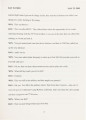
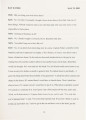
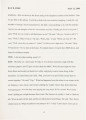
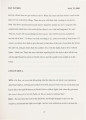
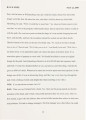
Show RAY D. FREE M 22 2000 WIN: A forward observer was always a high-risk duty wasn tit? RAY: Oh, yeah. High risk. And then, of course, when we finished up on Leyte and were assigned the main effort on Okinawa, we really had to hustle to get our battalion in shape and ready to go to Okinawa. And, of course, we landed four divisions: the 6th Marines, 1st Marines, 7th Army Division, and the 96th Army Division. The 1st Marines and 7th Army Division were assigned the main effort. And the 7th Division more or less had a foot race with the marines across the islands. One of the observers that went with us pointed out that he'd never been with troops like that before. He says, "They moved all day and that by the end of the day most of the troops had vegetables hanging from their belts. They settled down for the evening like it was just a routine business." He says, "When I looked back to see how far they'd come, I'd never come that far with a division in a day." He says, "The next morning it was the same thing, and by the end of the second evening we were all across the island." Hadn't met much resistance, but he'd never seen a unit that could move with the regularity and efficiency that we did across the island. And then, of course, we, the ih Army Division, swung south and hit hell, and marines up north hit nothing, and on with the Battle of Okinawa. WIN: How did your artillery compare with the Japanese? Were you much superior? RAY: Much superior. WIN: Much like in Europe, where at the Battle of the Bulge we had much superior artillery power than the Germans. In the Pacific you did the same? 38 |
| Reference URL |
https://collections.lib.utah.edu/ark:/87278/s6b877bd/1025551 |