| Title |
Richard K. Cluphf, Salt Lake City, Utah: an interview by Winston P. Erickson, August 18, 2000: Saving the legacy tape no. 90 and 91 |
| Alternative Title |
Richard K. Cluphf, Saving the legacy: an oral history of Utah's World War II veterans, ACCN 2070, American West Center, University of Utah |
| Creator |
Cluphf, Richard K., 1922-2002 |
| Contributor |
Erickson, Winston P., 1943-; University of Utah. American West Center |
| Publisher |
Digitized by J. Willard Marriott Library, University of Utah |
| Date |
2000-08-18 |
| Date Digital |
2015-09-16 |
| Access Rights |
I acknowledge and agree that all information I obtain as a result of accessing any oral history provided by the University of Utah's Marriott Library shall be used only for historical or scholarly or academic research purposes, and not for commercial purposes. I understand that any other use of the materials is not authorized by the University of Utah and may exceed the scope of permission granted to the University of Utah by the interviewer or interviewee. I may request permission for other uses, in writing to Special Collections at the Marriott Library, which the University of Utah may choose grant, in its sole discretion. I agree to defend, indemnify and hold the University of Utah and its Marriott Library harmless for and against any actions or claims that relate to my improper use of materials provided by the University of Utah. |
| Spatial Coverage |
France; Germany; Colorado, United States; Wyoming, United States |
| Subject |
Cluphf, Richard K., 1922-2002--Interviews; World War, 1939-1945--Personal narratives, American; Veterans--Utah--Biography; World War, 1939-1945--Aerial operations, American; World War, 1939-1945--Campaigns--Europe, Northern--Personal narratives, American |
| Keywords |
Navigators; Jimmy Stewart; Flight school; B-24 |
| Description |
Transcript (47 pages) of an interview by Winston P. Erickson with Richard K. Cluphf on August 18, 2000. This is from tape numbers 90 and 91 in the "Saving the Legacy Oral History Project |
| Collection Number and Name |
Accn2070, Saving the Legacy oral history project, 2001-2010 |
| Abstract |
Cluphf (b. 1922) grew up in Colorado and Wyoming. He enlisted in the Army Air Corps and was trained as a crewmember of the B-24. His first mission was to France, his second was over Friedrichshafen, Germany. He flew two missions as a navigator with actor James Stewart. He later qualified for training as a pilot and was in flight school on VE day and VJ day. He was discharged in December of 1945. 47 pages. |
| Type |
Text |
| Genre |
oral histories (literary works) |
| Format |
application/pdf |
| Extent |
47 pages |
| Language |
eng |
| Rights |
 |
| Scanning Technician |
Mazi Rakhsha |
| Conversion Specifications |
Original scanned with Kirtas 2400 and saved as 400 ppi uncompressed TIFF. PDF generated by Adobe Acrobat Pro X for CONTENTdm display |
| ARK |
ark:/87278/s68h0jzb |
| Topic |
Personal narratives--American; Veterans; World War (1939-1945); Military operations, Aerial--American |
| Setname |
uum_slohp |
| ID |
1025356 |
| Reference URL |
https://collections.lib.utah.edu/ark:/87278/s68h0jzb |
| Title |
Page 33 |
| Format |
application/pdf |
| Setname |
uum_slohp |
| ID |
1025340 |
| OCR Text |
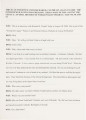
Show RICHARD K. CLUPHF l , 2 three years older than his brother. But he looked lik a pug. I had caulifl r ar nd hi nose was crooked, but he was quite an entertainer. In 1939 h had ld trick d ck f rd at the World's Fair in San Francisco. He had seven different d ck of card and h c uld d something different with each one of them. His dexterity you couldn't beli ve. H w uld pick up a deck of cards and tap it like that and thumb through it and e ery one of them wa the king f spades, or tap like that and there was the queen of hearts. He wouldn't tell us how he did it, but he did all kinds of things. In fact, he and I made a couple of thousands of bucks apiece one night when I finally got down to Watten. It was the first time we had been paid since we left the states. We got a partial payment. There were several bases where they would give you a couple of hundred bucks or whatever and mark it on you pay envelope. They brought everybody up to date when we were at Watten. Then we went down to the officer's club and Frank said, "Do you like to play blackjack?" I said, "Yes. Daddy used to play with us kids all the time." He said, "Let's see if we can get the deal. If we do, I will deal and you be the banker and we will pool our money." The rules of the game at that time, the way we played down there, if you got a blackjack you automatically got the deal. But if the dealer wanted to keep it, he could pay you so much so we would keep buying it back. We played blackjack for four or five hours and we had a stack of bills like that. We went back to the barracks and split it, and I ended with four thousand dollars. I was scared to death to have it, so I took it down to the post office the next morning and converted it into a money order and sent it back to my mom to take care of for me. He was so damn slick at dealing cards anyway. His favorite trick was the guy sitting next to the dealer you know, he would say, "Hit me." So I would throw out a card, and he would say, "You didn't bum 32 |
| Reference URL |
https://collections.lib.utah.edu/ark:/87278/s68h0jzb/1025340 |