| Title |
Charles "Mont" Mahoney, Salt Lake City, Utah: an interview by Becky B. Lloyd, March 12, 2003: Saving the legacy tape no. 622 |
| Alternative Title |
Charles "Mont" Mahoney, Saving the legacy: an oral history of Utah's World War II veterans, ACCN 2070, American West Center, University of Utah |
| Creator |
Mahoney, Charles (Mont), 1922- |
| Contributor |
Lloyd, Becky B.; University of Utah. American West Center |
| Publisher |
Digitized by J. Willard Marriott Library, University of Utah |
| Date |
2003-03-12 |
| Date Digital |
2015-09-16 |
| Access Rights |
I acknowledge and agree that all information I obtain as a result of accessing any oral history provided by the University of Utah's Marriott Library shall be used only for historical or scholarly or academic research purposes, and not for commercial purposes. I understand that any other use of the materials is not authorized by the University of Utah and may exceed the scope of permission granted to the University of Utah by the interviewer or interviewee. I may request permission for other uses, in writing to Special Collections at the Marriott Library, which the University of Utah may choose grant, in its sole discretion. I agree to defend, indemnify and hold the University of Utah and its Marriott Library harmless for and against any actions or claims that relate to my improper use of materials provided by the University of Utah. |
| Spatial Coverage |
France; Germany; Austria; Salt Lake City, Salt Lake County, Utah, United States |
| Subject |
Mahoney, Charles (Mont), 1922- --Interviews; World War, 1939-1945--Personal narratives, American; Veterans--Utah--Biography; World War, 1939-1945--Military operations, American; World War, 1939-1945--Campaigns--Europe, Northern--Personal narratives, American; Ardennes, Battle of the, 1944-1945--Personal narratives, American |
| Description |
Transcript (43 pages) of an interview by Becky B. Lloyd with Charles "Mont" Mahoney on March 12, 2003. This is from tape numbers 622.1 and 622.2 in the "Saving the Legacy Oral History Project |
| Collection Number and Name |
Accn2070, Saving the Legacy oral history project, 2001-2010 |
| Abstract |
Mahoney (b. 1922) was in ROTC at the University of Utah when the Japanese attacked Pearl Harbor. After his graduation in 1943 he was assigned to the 276th Armonred Field Artillery Battalion. He describes joining up with his tank crew in France, being diverted up to the Battle of the Bulge, combat in Germany, and coming into contact with liberated American prisoners of war whose fellow-prisoners had confiscated the lion's share of food packages, leaving them to starve. He served with the occupation forces in Austria. 43 pages. |
| Type |
Text |
| Genre |
oral histories (literary works) |
| Format |
application/pdf |
| Extent |
43 pages |
| Language |
eng |
| Rights |
 |
| Scanning Technician |
Mazi Rakhsha |
| Conversion Specifications |
Original scanned with Kirtas 2400 and saved as 400 ppi uncompressed TIFF. PDF generated by Adobe Acrobat Pro X for CONTENTdm display |
| ARK |
ark:/87278/s6v42tf5 |
| Topic |
Personal narratives--American; Veterans; World War (1939-1945); Ardennes, Battle of the (1944-1945) |
| Setname |
uum_slohp |
| ID |
1024962 |
| Reference URL |
https://collections.lib.utah.edu/ark:/87278/s6v42tf5 |
| Title |
Page 25 |
| Format |
application/pdf |
| Setname |
uum_slohp |
| ID |
1024942 |
| OCR Text |
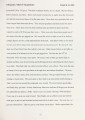
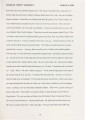
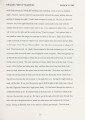
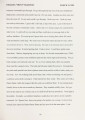
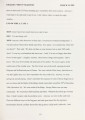
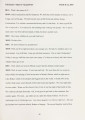
Show 'MO "M 0 and gun emplacements all in concrete. Then aero th b rd th which was in Germany. We went through that. Of cour it had b n h r d had been cleared because we weren't on the point. Point was th on ut · th front. These next, I don't remember which happened first. We got ov r into rmany where they grew grapes for wine. We'd get out as we'd get up on these plateau b tw n valleys that were I guess, two or three hundred feet deep. The streams went down the valley, and we'd go up to the prairie, where the crops were. We'd get two or three tanks abreast and we would go through those grape vines. There were posts sticking up about three feet with wires between them. We had a good time going through catching those wires in the tracks of the tanks. It would pull the wires in a hundred yards in both directions. I guess we enjoyed that. I don't know, I guess we were being naughty, but those types of things, a little levity and fun, didn't hurt us at all. Well, anyway, the next one, we went into aU-shaped valley. We went up over a hill. The U-shaped valley was like some of the ones in eastern Utah. The river came down and over a cliff and down in and then there was quite a valley in between, but there was a cliff or hill all the way around it. We went up over this hill. We had infantry that were riding on the sides of our tanks and walking between us. We got about 200 yards from the knoll of the hill into the first town, which was seven or eight homes, just kind of a farming community. We had no resistance, so we went around it. As we got in another hundred yards, they started shooting at us from up on those hills with anti-tank guns and artillery. What we did was, we just backed out that 300 yards, back to the knoll of the hill. My job was to direct our artillery fire on those ones that were shooting at us. I backed down over the hill so that I could just barely see over the top of the hill and see where they were. As I was directing 24 |
| Reference URL |
https://collections.lib.utah.edu/ark:/87278/s6v42tf5/1024942 |