| Title |
O. Marvin Lewis, Salt Lake City, Utah: an interview by Winston P. Erickson, October 18, 2000 & January 17, 2001: Saving the legacy tape no. 307 and 308 |
| Alternative Title |
O. Marvin Lewis, Saving the legacy: an oral history of Utah's World War II veterans, ACCN 2070, American West Center, University of Utah |
| Creator |
Lewis, O. Marvin (Oliver Marvin), 1924-2015 |
| Contributor |
Erickson, Winston P., 1943-; University of Utah. American West Center |
| Publisher |
Digitized by J. Willard Marriott Library, University of Utah |
| Date |
2000-10-18; 2001-01-17 |
| Date Digital |
2015-09-16 |
| Access Rights |
I acknowledge and agree that all information I obtain as a result of accessing any oral history provided by the University of Utah's Marriott Library shall be used only for historical or scholarly or academic research purposes, and not for commercial purposes. I understand that any other use of the materials is not authorized by the University of Utah and may exceed the scope of permission granted to the University of Utah by the interviewer or interviewee. I may request permission for other uses, in writing to Special Collections at the Marriott Library, which the University of Utah may choose grant, in its sole discretion. I agree to defend, indemnify and hold the University of Utah and its Marriott Library harmless for and against any actions or claims that relate to my improper use of materials provided by the University of Utah. |
| Spatial Coverage |
New Guinea; Philippines; Okinawa; Ogden, Weber County, Utah, United States |
| Subject |
Lewis, O. Marvin (Oliver Marvin), 1924-2015--Interviews; World War, 1939-1945--Personal narratives, American; Veterans--Utah--Biography; World War, 1939-1945--Military operations, American; World War, 1939-1945--Campaigns--Pacific Area--Personal narratives, American |
| Description |
Transcript (63 pages) of an interview by Winston P. Erickson with O. Marvin Lewis on October 18, 2000, and January 17, 2001. This is from tape numbers 307 and 308 in the "Saving the Legacy Oral History Project |
| Collection Number and Name |
Accn2070, Saving the Legacy oral history project, 2001-2010 |
| Abstract |
Lewis (b. 1924) grew up in Ogden, Utah, entered the army in 1943, and was assigned to the 11th Airborne Division. He describes his jump training, the voyage on a troop ship to New Guinea, being wounded in the Philippines, rejoining his unit and being shipped to Okinawa, hearing about the Hiroshima bomb, and serving in the occupation forces. Lewis also describes his post-war activities in medical school and practicing internal medicine in Ogden. He also talks about learning to fly and various aircraft he has owned. 63 pages. |
| Type |
Text |
| Genre |
oral histories (literary works) |
| Format |
application/pdf |
| Extent |
63 pages |
| Language |
eng |
| Rights |
 |
| Scanning Technician |
Mazi Rakhsha |
| Conversion Specifications |
Original scanned with Kirtas 2400 and saved as 400 ppi uncompressed TIFF. PDF generated by Adobe Acrobat Pro X for CONTENTdm display |
| ARK |
ark:/87278/s6c26vqn |
| Topic |
Personal narratives--American; Veterans; World War (1939-1945) |
| Setname |
uum_slohp |
| ID |
1024485 |
| Reference URL |
https://collections.lib.utah.edu/ark:/87278/s6c26vqn |
| Title |
Page 12 |
| Format |
application/pdf |
| Setname |
uum_slohp |
| ID |
1024431 |
| OCR Text |
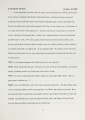
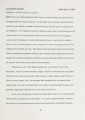
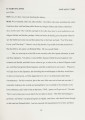
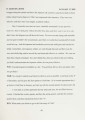
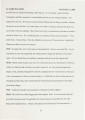
Show 0. MARVIN LEWIS WIN: How did you like jumping? MAR: Well, it was very much anti-climax. You don t have the s nsation th t u d when falling, like you do when you get off of a six-foot diving board. I cou dn t stand th idea of jumping off of a six-foot diving board, but jumping out of a plane - you just sort of squirt out the back, and the noise - You don't have the sensation of falling at all. And then there's the shock of the opening of your parachute. It was not necessarily painful. WIN: Was it fun? MAR: Yeah, to some extent it was fun. We looked forward to jumping. You know, the more jumps we could accumulate, the better we felt about it, you know. WIN: Could you control those old parachutes very easily? MAR: Well, not too easily. They're not like the current 'chutes they use today. They were small 'chutes, 28 feet diameter as I recall, and our reserves were 22 feet, but the big comfortable 'chutes tha~ they have now that they can pull down the minute that they land, and land standing up even- that makes me wonder! Boy, we used to land like a sack of cement! The thought was that it was about the same as jumping off of a sixteen foot building. In other words, you would land like a sack of cement and you just try, as you get closer and closer to the ground, to judge when the land was going to hit you- and it was difficult to make that judgement. And, when you'd land, you'd land so hard, you'd try to relax the best you could, and relax and go like a sack of potatoes or whatever. We were originally taught you were supposed to land on your feet and then tumble forward - that's a bunch of crap! We'd land like a sack of potatoes, whomp! And you'd hope that 10 |
| Reference URL |
https://collections.lib.utah.edu/ark:/87278/s6c26vqn/1024431 |