| Title |
Ralph M. Tannenbaum, Salt Lake City, Utah: an interview by Winston P. Erickson, May 31, 2000: Saving the legacy tape no. 31 |
| Alternative Title |
Ralph M. Tannenbaum, Saving the legacy: an oral history of Utah's World War II veterans, ACCN 2070, American West Center, University of Utah |
| Creator |
Tannenbaum, Ralph M., 1921-2006 |
| Contributor |
Erickson, Winston P., 1943-; University of Utah. American West Center |
| Publisher |
Digitized by J. Willard Marriott Library, University of Utah |
| Date |
2000-05-31 |
| Date Digital |
2015-09-16 |
| Access Rights |
I acknowledge and agree that all information I obtain as a result of accessing any oral history provided by the University of Utah's Marriott Library shall be used only for historical or scholarly or academic research purposes, and not for commercial purposes. I understand that any other use of the materials is not authorized by the University of Utah and may exceed the scope of permission granted to the University of Utah by the interviewer or interviewee. I may request permission for other uses, in writing to Special Collections at the Marriott Library, which the University of Utah may choose grant, in its sole discretion. I agree to defend, indemnify and hold the University of Utah and its Marriott Library harmless for and against any actions or claims that relate to my improper use of materials provided by the University of Utah. |
| Spatial Coverage |
Guadalcanal; Philippines; Salt Lake City, Salt Lake County, Utah, United States |
| Subject |
Tannenbaum, Ralph M., 1921-2006--Interviews; World War, 1939-1945--Personal narratives, American; Veterans--Utah--Biography; World War, 1939-1945--Naval operations, American; World War, 1939-1945--Campaigns--Pacific Area--Personal narratives, American |
| Description |
Transcript (27 pages) of an interview by Winston P. Erickson with Ralph M. Tannenbaum on May 31, 2000. This is from tape number 31 in the "Saving the Legacy Oral History Project |
| Collection Number and Name |
Accn2070, Saving the Legacy oral history project, 2001-2010 |
| Abstract |
Ralph D. Tannenbaum (b. 1921) recalls his childhood in Salt Lake City, joining up with the navy V-7 officer procurement program, training, and being assigned to the heavy cruiser USS Chicago at Pearl Harbor in the Spring of 1941. His ship left Pearl Harbor on December 1 as escort to the aircraft carrier Enterprise, and so was not in port when the Japanese attacked. Other topics covered includes an early radar device called CXAM, duty in Australia, the battle of Coral Sea, shore leave, getting married, being stationed in New Caledonia, ship duty throughout the Pacific, and post-war reserve duty. 27 pages. |
| Type |
Text |
| Genre |
oral histories (literary works) |
| Format |
application/pdf |
| Extent |
27 pages |
| Language |
eng |
| Rights |
 |
| Scanning Technician |
Mazi Rakhsha |
| Conversion Specifications |
Original scanned with Kirtas 2400 and saved as 400 ppi uncompressed TIFF. PDF generated by Adobe Acrobat Pro X for CONTENTdm display |
| ARK |
ark:/87278/s6tx5dnn |
| Topic |
Personal narratives--American; Veterans; World War (1939-1945); Military operations, Naval--American |
| Setname |
uum_slohp |
| ID |
1024057 |
| Reference URL |
https://collections.lib.utah.edu/ark:/87278/s6tx5dnn |
| Title |
Page 23 |
| Format |
application/pdf |
| Setname |
uum_slohp |
| ID |
1024050 |
| OCR Text |
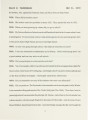
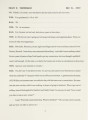
Show RALPH M . TANNENBAUM RAL: No question. WIN: Because of the Japanese loss of their skilled pilots. RAL: That's correct. WIN: Did you feel good about the U.S. air cover? MAY 31, 2000 RAL: Yes, most of the time. We didn't have a thing to worry about from that angle. Frankly, we worried more about submarines. Of course, when we would go up the "Slot"-- you see, we would generally go out ofTulagi, which is adjacent to Guadalcanal. We'd leave about five 'o clock in the evening with the idea of going up past Choiseul and the Solomons. As darkness came on--it was always planned for a dark night to go up and bombard, or intercept, or whatever. And it was very, very eerie. We'd get reports from key sources. One was what we called Catalinas, the black cats, these big amphibious planes. And they would report on Japanese movements. And there were coast watchers of up there, Australians. They would report. So we knew pretty well if anything was coming down. WIN: As far as submarines, you didn't have any underwater submarine detection, or sonar or ... ? RAL: Well, the destroyers with us did. Cruisers didn't have, though. WIN: So the destroyers were very effective? RAL: I would say so. I would say so. Quite honestly, in the restricted waters that we were in, when we were going up and down the Slot, there really was not too much danger of subs. On the other hand, when we were down around the Coral Sea, which was more open water, why there 21 |
| Reference URL |
https://collections.lib.utah.edu/ark:/87278/s6tx5dnn/1024050 |