| Title |
Thomas Duncombe Dee II, Ogden, Utah: an interview by Becky B. Lloyd, January 7, 2006: Saving the legacy tape no. 751 |
| Alternative Title |
Thomas Duncombe Dee II, Saving the legacy: an oral history of Utah's World War II veterans, ACCN 2070, American West Center, University of Utah |
| Creator |
Dee, Thomas Duncombe, 1920-2009 |
| Contributor |
Lloyd, Becky B.; University of Utah. American West Center |
| Publisher |
Digitized by J. Willard Marriott Library, University of Utah |
| Date |
2006-01-07 |
| Date Digital |
2015-09-16 |
| Access Rights |
I acknowledge and agree that all information I obtain as a result of accessing any oral history provided by the University of Utah's Marriott Library shall be used only for historical or scholarly or academic research purposes, and not for commercial purposes. I understand that any other use of the materials is not authorized by the University of Utah and may exceed the scope of permission granted to the University of Utah by the interviewer or interviewee. I may request permission for other uses, in writing to Special Collections at the Marriott Library, which the University of Utah may choose grant, in its sole discretion. I agree to defend, indemnify and hold the University of Utah and its Marriott Library harmless for and against any actions or claims that relate to my improper use of materials provided by the University of Utah. |
| Spatial Coverage |
Cairo, Egypt; Ogden, Weber County, Utah, United States |
| Subject |
Dee, Thomas Duncombe, 1920-2009--Interviews; World War, 1939-1945--Personal narratives, American; Veterans--Utah--Biography; World War, 1939-1945--Aerial operations, American; World War, 1939-1945--Campaigns--Africa, North--Personal narratives, American |
| Keywords |
Army Air Corps; 14th Airways Communications Division; C-60; Plane crashes |
| Description |
Transcript (24 pages) of an interview by Becky B. Lloyd with Thomas Duncombe Dee II on January 7, 2006. This is from tape number 751 in the "Saving the Legacy Oral History Project |
| Collection Number and Name |
Accn2070, Saving the Legacy oral history project, 2001-2010 |
| Abstract |
Dee (b. 1920) describes his genealogy and recalls his boyhood in Ogden, Utah. He graduated from Stanford University before enlising in the Army Air Corps in December 1941. After training in Palm Beach, Florida, he was assigned to the 14th Airways Communications Division stationed in Cairo. He discusses his assignment and experiences there, including a detailed account of a C-60 twin-engine transport crash he survived. He was sent back to the states to recover and remained there until the end of the war. 24 pages. |
| Type |
Text |
| Genre |
oral histories (literary works) |
| Format |
application/pdf |
| Extent |
24 pages |
| Language |
eng |
| Rights |
 |
| Scanning Technician |
Mazi Rakhsha |
| Conversion Specifications |
Original scanned with Kirtas 2400 and saved as 400 ppi uncompressed TIFF. PDF generated by Adobe Acrobat Pro X for CONTENTdm display |
| ARK |
ark:/87278/s6cr7smr |
| Topic |
Personal narratives--American; Veterans; World War (1939-1945); Military operations, Aerial--American |
| Setname |
uum_slohp |
| ID |
1023731 |
| Reference URL |
https://collections.lib.utah.edu/ark:/87278/s6cr7smr |
| Title |
Page 13 |
| Format |
application/pdf |
| Setname |
uum_slohp |
| ID |
1023718 |
| OCR Text |
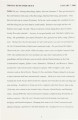
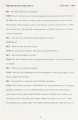
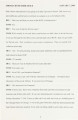
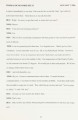
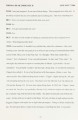
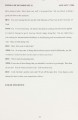
Show THOM D M OMB D II J R 7 200 black. Th plane in th se days would go out in the bay and taxi back and ~ rth ba k and forth, until they had enough speed to get the cussed plan in th air. It was an experience in flying because they had four engines on there and I think that they generated about maybe a hundred and fifty horsepower apiece. At full power, it would only do about a 120 miles an hour. We flew and we flew and we flew. We finally landed someplace. I asked, "Where are we?" They said, "We're at Belem Brazil." So, by George, they had a place all set up for us there. We had breakfast. Then we got on the plane again and flew further down the coast [Editor 's note: The "Southern Air Route " across the Atlantic usually included a stop in Belem, and then Natal, Brazil, then across the water to Ascension Island and from there to Africa.] To make a long story short, after about four or five days, we finally got to Africa. Oh, dear me. There was Ascension Island out in the middle of the Atlantic. We landed there. All the planes that went to Africa had to stop there. That was the only place to stop for fuel. Then we flew to West Africa. By that time they'd lost an engine so we had to stop there for three or four days. Well, we finally got an engine. I said, "Well, now where am I supposed to go?" They said, "Well, you're going to join this outfit, this 14th Airways Communication System. You're going down to Leopoldville in Belgium Congo and establish a communications base and build a radio tower down there for air to ground and ground to air communications." We had to keep in touch with the aircraft at all times in the air. We had to have the ability to land planes in bad weather and so on. So we ended up down in Leopoldville and they had set up a new unit down there. They even had a hospital with nurses. I was there a couple of months and I'll be darned if I didn't catch yellow jaundice. Oh, god, anyway, I just turned yellow as could be. The Belgians had a hospital 12 |
| Reference URL |
https://collections.lib.utah.edu/ark:/87278/s6cr7smr/1023718 |