| Title |
William J. Maynes, Salt Lake City, Utah: an interview by Winston P. Erickson, June 19, 2000: Saving the legacy tape no. 42 |
| Alternative Title |
William J. Maynes, Saving the legacy: an oral history of Utah's World War II veterans, ACCN 2070, American West Center, University of Utah |
| Creator |
Maynes, William J., 1917-2009 |
| Contributor |
Erickson, Winston P., 1943-; University of Utah. American West Center |
| Publisher |
Digitized by J. Willard Marriott Library, University of Utah |
| Date |
2000-06-19 |
| Date Digital |
2015-09-16 |
| Access Rights |
I acknowledge and agree that all information I obtain as a result of accessing any oral history provided by the University of Utah's Marriott Library shall be used only for historical or scholarly or academic research purposes, and not for commercial purposes. I understand that any other use of the materials is not authorized by the University of Utah and may exceed the scope of permission granted to the University of Utah by the interviewer or interviewee. I may request permission for other uses, in writing to Special Collections at the Marriott Library, which the University of Utah may choose grant, in its sole discretion. I agree to defend, indemnify and hold the University of Utah and its Marriott Library harmless for and against any actions or claims that relate to my improper use of materials provided by the University of Utah. |
| Spatial Coverage |
San Diego, San Diego County, California, United States; El Centro, Imperial County, California, United States; Salt Lake County, Utah, United States |
| Subject |
Maynes, William J., 1917-2009--Interviews; World War, 1939-1945--Personal narratives, American; Veterans--Utah--Biography |
| Keywords |
Marine Corps; Quartermaster Corps |
| Description |
Transcript (44 pages) of an interview by Winston P. Erickson with William J. Maynes on June 19, 2000. This is from tape number 42 in the "Saving the Legacy Oral History Project |
| Collection Number and Name |
Accn2070, Saving the Legacy oral history project, 2001-2010 |
| Abstract |
Maynes (b. 1917) was born and raised in Salt Lake City, serving in the Civilian Conservation Corps (CCC), Works Progress Administration (WPA), and National Youth Administration (NYA) before enlisting in the Marine Corps in July 1941. He was assigned to the Quartermaster Corps and stationed in San Diego, then accepted for flight training and sent to the Memphis Naval Air Station. He was in flight training when Japan surrendered and was discharged in May 1946. 44 pages. |
| Type |
Text |
| Genre |
oral histories (literary works) |
| Format |
application/pdf |
| Extent |
44 pages |
| Language |
eng |
| Rights |
 |
| Scanning Technician |
Mazi Rakhsha |
| Conversion Specifications |
Original scanned with Kirtas 2400 and saved as 400 ppi uncompressed TIFF. PDF generated by Adobe Acrobat Pro X for CONTENTdm display |
| ARK |
ark:/87278/s6km1b3v |
| Topic |
Personal narratives--American; Veterans; World War (1939-1945) |
| Setname |
uum_slohp |
| ID |
1023600 |
| Reference URL |
https://collections.lib.utah.edu/ark:/87278/s6km1b3v |
| Title |
Page 29 |
| Format |
application/pdf |
| Setname |
uum_slohp |
| ID |
1023582 |
| OCR Text |
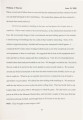
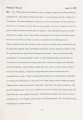
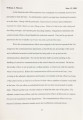
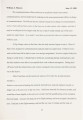
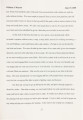
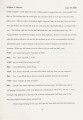
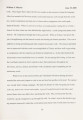
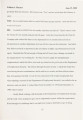
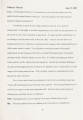
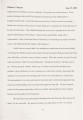
Show William J. Maynes Jun 19 20 test: Swim two hundred yards with good form one-half mile with cl th n and n mile without clothes. We were taught to jump off from a twelve foot platform tak ff our pants under water, tie knots in the legs and fill the pants with air and u e them to h lp keep our heads above water. We also were taught how to survive if we got shot down over land, and were scheduled to go on a three-day survival hike to test our skills. At the start of the three day hike we were given a sixty pound pack which included a canteen without water, a map, a sharp knife, utensils for cooking and eating, a tent and bedding, water purification pills, and matches. We had to rely on the land for our food and water. We were divided up into teams of two men each, given our compass direction, and were told what time to be in camp. We ran into a black sharecrop farmer as we were traveling across some fields. He lived in a shack with a well next to it, so we went over and engaged him in conversation while we rested. He was very friendly, and was happy that we went out of our way to visit with him. He offered us a drink from his well and filled our canteens. That was the reason for our going to see him in the first place. The sixty pound pack we were lugging felt like 250 pounds before we had gone very far, but we enjoyed the hike in spite of getting weary and footsore. The first day we had to go up hill and down dale, and plow through jungle for about five miles. Then that evening, we were hauled about two and one half miles from camp and had to take a direct course back to camp. It sounds easy unless you have seen the undergrowth and swamps we had to plow through. It was so dark we had to grope our way along relying on a compass for bearing. At the end of one swamp my companion 27 |
| Reference URL |
https://collections.lib.utah.edu/ark:/87278/s6km1b3v/1023582 |