| Title |
Wes Nordgren, Salt Lake City, Utah: an interview by Becky B. Lloyd, February 23, 2004: Saving the legacy tape no. 645 |
| Alternative Title |
Wes Nordgren, Saving the legacy: an oral history of Utah's World War II veterans, ACCN 2070, American West Center, University of Utah |
| Creator |
Nordgren, Wes, 1922-2015 |
| Contributor |
Lloyd, Becky B.; University of Utah. American West Center |
| Publisher |
Digitized by J. Willard Marriott Library, University of Utah |
| Date |
2004-02-23 |
| Date Digital |
2015-09-16 |
| Access Rights |
I acknowledge and agree that all information I obtain as a result of accessing any oral history provided by the University of Utah's Marriott Library shall be used only for historical or scholarly or academic research purposes, and not for commercial purposes. I understand that any other use of the materials is not authorized by the University of Utah and may exceed the scope of permission granted to the University of Utah by the interviewer or interviewee. I may request permission for other uses, in writing to Special Collections at the Marriott Library, which the University of Utah may choose grant, in its sole discretion. I agree to defend, indemnify and hold the University of Utah and its Marriott Library harmless for and against any actions or claims that relate to my improper use of materials provided by the University of Utah. |
| Spatial Coverage |
San Diego, San Diego County, California, United States; Florida, United States |
| Subject |
Nordgren, Wes, 1922-2015--Interviews; World War, 1939-1945--Personal narratives, American; Veterans--Utah--Biography; World War, 1939-1945--Naval operations, American; World War, 1939-1945--Naval operations, American |
| Description |
Transcript (26 pages) of an interview by Becky B. Lloyd with Wes Nordgren on February 23, 2004. This is from tape number 645 in the "Saving the Legacy Oral History Project |
| Collection Number and Name |
Accn2070, Saving the Legacy oral history project, 2001-2010 |
| Abstract |
Nordgren (b. 1922) joined the Navy early in 1941. He recounts the story of the rescue of a paratrooper whose chute had caught on the tail of a DC-3. He describes his flight training, meeting and marrying his wife, and his postwar service in the Reserves, and being a flight controller. 26 pages. |
| Type |
Text |
| Genre |
oral histories (literary works) |
| Format |
application/pdf |
| Extent |
26 pages |
| Language |
eng |
| Rights |
 |
| Scanning Technician |
Mazi Rakhsha |
| Conversion Specifications |
Original scanned with Kirtas 2400 and saved as 400 ppi uncompressed TIFF. PDF generated by Adobe Acrobat Pro X for CONTENTdm display |
| ARK |
ark:/87278/s65f0r30 |
| Topic |
Personal narratives--American; Veterans; World War (1939-1945); Military operations, Naval--American |
| Setname |
uum_slohp |
| ID |
1023473 |
| Reference URL |
https://collections.lib.utah.edu/ark:/87278/s65f0r30 |
| Title |
Page 17 |
| Format |
application/pdf |
| Setname |
uum_slohp |
| ID |
1023462 |
| OCR Text |
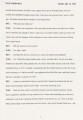
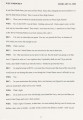
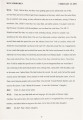
Show WESNORDGRE BR R 23,2 04 WES: Not the big planes; they were too big. This raid that you probably have se n a movie of it, "Thirty Seconds over Tokyo", Doolittle and those pilots were actually trained to take off on a carrier with those B-25s by a pilot in the squadron I was in at Pensacola. BEC: Really? WES: They would train there and they actually came to our field one day and this pilot, out of our squadron, was teaching them how to take those things off of the carrier. We saw them practice one day, on takeoff, on our field when they came over there. They were at the Army airfield there-the name slips my mind at the moment. They were near Eglin Air Force Base is where it was in Florida. That was a big part, that raid. Pretty dull life that I led. BEC: After the war was over with and you would go out on your two-week cruises, were you still flying then? WES: On the cruises, yes. Yes, we flew all over the country. BEC: Would you fly off carriers when you were, say, on the Hornet? WES: No, I hadn't been flying that type of airplane for quite some time, and they wanted me to come out on the flight deck there one time, but you had to have a jersey on that denoted what you did on the deck. Nobody was supposed to be on there except the ones that were necessary. For example, the refueling crew had a red shirt on and the plane handlers, the ones that direct the planes, had green shirts. The only one they could give me to keep me out of the way, yet keep me on the flight deck where I would observe, was to give me a white one. That denoted a doctor. So I was out there ... I was sure glad nobody cracked up (laughs). BEC: This was a buddy who wanted you to come up on deck? 16 |
| Reference URL |
https://collections.lib.utah.edu/ark:/87278/s65f0r30/1023462 |