| Title |
Ross Fullmer, Salt Lake City, Utah: an interview by Becky B. Lloyd, April 12 and 15, 2002: Saving the legacy tape no. 440 |
| Alternative Title |
Ross Fullmer, Saving the legacy: an oral history of Utah's World War II veterans, ACCN 2070, American West Center, University of Utah |
| Creator |
Fullmer, Ross, 1923-2009 |
| Contributor |
Lloyd, Becky B.; University of Utah. American West Center |
| Publisher |
Digitized by J. Willard Marriott Library, University of Utah |
| Date |
2002-04-12; 2002-04-15 |
| Date Digital |
2015-09-16 |
| Access Rights |
I acknowledge and agree that all information I obtain as a result of accessing any oral history provided by the University of Utah's Marriott Library shall be used only for historical or scholarly or academic research purposes, and not for commercial purposes. I understand that any other use of the materials is not authorized by the University of Utah and may exceed the scope of permission granted to the University of Utah by the interviewer or interviewee. I may request permission for other uses, in writing to Special Collections at the Marriott Library, which the University of Utah may choose grant, in its sole discretion. I agree to defend, indemnify and hold the University of Utah and its Marriott Library harmless for and against any actions or claims that relate to my improper use of materials provided by the University of Utah. |
| Spatial Coverage |
Pearl Harbor, Oahu, Hawaii, United States; New Zealand; Australia; Midway Islands; Salt Lake City, Salt Lake County, Utah, United States |
| Subject |
Fullmer, Ross, 1923-2009 --Interviews; World War, 1939-1945--Personal narratives, American; Veterans--Utah--Biography; World War, 1939-1945--Naval operations, American; World War, 1939-1945--Campaigns--Pacific Area--Personal narratives, American; Pearl Harbor (Hawaii), Attack on, 1941 |
| Description |
Transcript (44 pages) of an interview by Becky B. Lloyd with Ross Fullmer on April 12 and 15, 2002. This is from tape number 440 in the "Saving the Legacy Oral History Project |
| Collection Number and Name |
Accn2070, Saving the Legacy oral history project, 2001-2010 |
| Abstract |
Fullmer (b. 1923) joined the Navy in December 1940. After basic training he was transported to Hawaii on the oil tanker USS Tippecanoe before transferring to the West Virginia on the morning that Pearl Harbor was attacked. He describes the attack in detail and recalls his experiences on his next ship, the Chicago. He saw action in the Pacific around New Zealand, Australia, and the Coral Sea. He was serving on Midway Island when the war ended. He was discharged in 1946. 44 pages. |
| Type |
Text |
| Genre |
oral histories (literary works) |
| Format |
application/pdf |
| Extent |
44 pages |
| Language |
eng |
| Rights |
 |
| Scanning Technician |
Mazi Rakhsha |
| Conversion Specifications |
Original scanned with Kirtas 2400 and saved as 400 ppi uncompressed TIFF. PDF generated by Adobe Acrobat Pro X for CONTENTdm display |
| ARK |
ark:/87278/s60g5jcs |
| Topic |
Personal narratives--American; Veterans; World War (1939-1945); Military operations, Naval--American; Pearl Harbor, Attack on (Hawaii : 1941) |
| Setname |
uum_slohp |
| ID |
1022735 |
| Reference URL |
https://collections.lib.utah.edu/ark:/87278/s60g5jcs |
| Title |
Page 44 |
| Format |
application/pdf |
| Setname |
uum_slohp |
| ID |
1022733 |
| OCR Text |
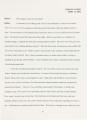
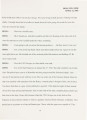
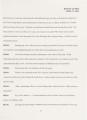
Show R L R 12 2002 inter iewed I was never told about all of the different types of extra work that th y requir d f m . I had a large family and at this point no where else to go, so I had to continu on. I stayed there for twenty-four years. Worked very hard and worked long hours during those years. My knees started to wear out after a few years, but I stuck it out until 1985, then I took an early medical retirement. From that point on, I only did things that I enjoyed doing. I felt that I owed myself that much. BECK: Backing up, now, when you were coming on board the Chicago for the first time, you said they were pulling the piano out. Was there some significance to that? ROSS: All of the orchestra and their instruments were taken off the ship. All the battleships and the cruisers had orchestras on board. A lot of musicians were rated as such. They entertained the ship's crew. Also they march and play at different types of ceremonies. BECK: But because this was wartime, all that was gone. ROSS: When I was stationed on the West Virginia, and docked at Pearl Harbor, the orchestra would always play during the lunch hour. A large canopy was set up on the bow of the ship for them. BECK: That's interesting. Okay, two more things that I want to ask you. Did you have a nickname? ROSS: No, I don't think so. I've been referred to a lot of times with a lot of different names, but nothing stuck. BECK: All right, the other thing I wanted to ask you was about your brothers. Were your 43 |
| Reference URL |
https://collections.lib.utah.edu/ark:/87278/s60g5jcs/1022733 |