| Title |
Lee E. Tucker, Salt Lake City, Utah: an interview by Winston P. Erickson, May 19, 2000: Saving the legacy tape no. 13 and 14 |
| Alternative Title |
Lee E. Tucker, Saving the legacy: an oral history of Utah's World War II veterans, ACCN 2070, American West Center, University of Utah |
| Creator |
Tucker, Lee E., 1924- |
| Contributor |
Erickson, Winston P., 1943-; University of Utah. American West Center |
| Publisher |
Digitized by J. Willard Marriott Library, University of Utah |
| Date |
2000-05-19 |
| Date Digital |
2015-09-16 |
| Access Rights |
I acknowledge and agree that all information I obtain as a result of accessing any oral history provided by the University of Utah's Marriott Library shall be used only for historical or scholarly or academic research purposes, and not for commercial purposes. I understand that any other use of the materials is not authorized by the University of Utah and may exceed the scope of permission granted to the University of Utah by the interviewer or interviewee. I may request permission for other uses, in writing to Special Collections at the Marriott Library, which the University of Utah may choose grant, in its sole discretion. I agree to defend, indemnify and hold the University of Utah and its Marriott Library harmless for and against any actions or claims that relate to my improper use of materials provided by the University of Utah. |
| Spatial Coverage |
England; Germany; Salt Lake County, Utah, United States |
| Subject |
Tucker, Lee E., 1924- --Interviews; World War, 1939-1945--Personal narratives, American; Veterans--Utah--Biography; World War, 1939-1945--Aerial operations, American; World War, 1939-1945--Campaigns--Europe, Northern--Personal narratives, American |
| Keywords |
9th Air Force, 404th Fighter Group, 507th Fighter Squadron; P-47Ds |
| Description |
Transcript (57 pages) of an interview by Winston P. Erickson with Lee E. Tucker on May 19, 2000. This is from tape numbers 13 and 14 in the "Saving the Legacy Oral History Project |
| Collection Number and Name |
Accn2070, Saving the Legacy oral history project, 2001-2010 |
| Abstract |
Lee Tucker (b. 1924) describes his youth on a farm in East Mill Creek, Utah, during the Depression. He attended the University of Utah prior to enlisting in the army air corps. He recalls his training experiences, including meeting his fellow trainee and future actor, Jack Webb. He joined the 9th Air Force, 404th Fighter Group, 507th Fighter Squadron as a pilot of P-47Ds, and was stationed in England, where he flew fifty-four missions. He was discharged at war's end but chose to remain in the reserves and was called up for stateside duty during the Korean conflict. 57 pages. |
| Type |
Text |
| Genre |
oral histories (literary works) |
| Format |
application/pdf |
| Extent |
57 pages |
| Language |
eng |
| Rights |
 |
| Scanning Technician |
Mazi Rakhsha |
| Conversion Specifications |
Original scanned with Kirtas 2400 and saved as 400 ppi uncompressed TIFF. PDF generated by Adobe Acrobat Pro X for CONTENTdm display |
| ARK |
ark:/87278/s6fr1vv2 |
| Topic |
Personal narratives--American; Veterans; World War (1939-1945); Military operations, Aerial--American |
| Setname |
uum_slohp |
| ID |
1022689 |
| Reference URL |
https://collections.lib.utah.edu/ark:/87278/s6fr1vv2 |
| Title |
Page 30 |
| Format |
application/pdf |
| Setname |
uum_slohp |
| ID |
1022660 |
| OCR Text |
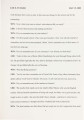
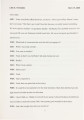
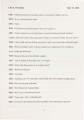
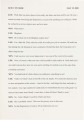
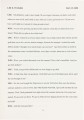
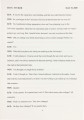
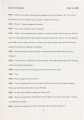
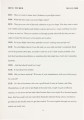
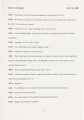
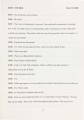
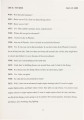
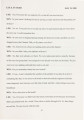
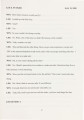
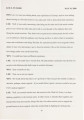
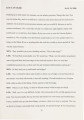
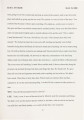
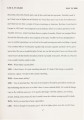
Show LEE E. TUCKER M 19 2000 breaking up a tank attack, for instance, on our infantry position. Things like that. That was our main duty, and we would have a mission come down that said we need twelve airplanes on an armed reconnaissance mission, and you would fly between so and so certain coordinates. We would take off and we would have eight fighters armed with bombs and we would have four fighters flying top cover in case the German fighters attacked us. We would fly over the German countryside to see if we spotted trains or a barge on the Rhine River or anything like that, and they would go down and kill it. That was the main mission. WIN: They wouldn't give you a briefing and say, "This is the target?" LEE: We had that occasionally, yes. We would say, "Okay, now the armies are going to start a big push here and your target is this railroad junction. Here we want that completely knocked out, so there can't be any German reinforcements coming up." WIN: So they had you try and knock out bridges? LEE: Yes, we tried for about nine months to knock out a bridge over the Rhine River, and when I went back afterwards, it was still standing. We had bombed every German field within a mile of that thing, I think, and never hit the bridge. WIN: When you are flying, it's hard to discern exactly which troops are which. LEE: Well, yes, it is very difficult. In fact, I have been shot at by our flak gunners in our army. Not me personally, but our air force had strafed our own troops and bombed them. It was a terrible mix up, but those things, you know, there is no way to stop that. The way we did it in Europe, our people had orange panels, our ground troops. If we were going to 29 |
| Reference URL |
https://collections.lib.utah.edu/ark:/87278/s6fr1vv2/1022660 |