| Title |
Clarence E. Allred, Salt Lake City, Utah: an interview by Winston P. Erickson, June 2, 2000: Saving the legacy tape no. 44 |
| Alternative Title |
Clarence E. Allred, Saving the legacy: an oral history of Utah's World War II veterans, ACCN 2070, American West Center, University of Utah |
| Creator |
Allred, Clarence E., 1924-2015 |
| Contributor |
Erickson, Winston P., 1943-; University of Utah. American West Center |
| Publisher |
Digitized by J. Willard Marriott Library, University of Utah |
| Date |
2000-06-02 |
| Date Digital |
2015-09-16 |
| Access Rights |
I acknowledge and agree that all information I obtain as a result of accessing any oral history provided by the University of Utah's Marriott Library shall be used only for historical or scholarly or academic research purposes, and not for commercial purposes. I understand that any other use of the materials is not authorized by the University of Utah and may exceed the scope of permission granted to the University of Utah by the interviewer or interviewee. I may request permission for other uses, in writing to Special Collections at the Marriott Library, which the University of Utah may choose grant, in its sole discretion. I agree to defend, indemnify and hold the University of Utah and its Marriott Library harmless for and against any actions or claims that relate to my improper use of materials provided by the University of Utah. |
| Spatial Coverage |
Marshall Islands; Japan |
| Subject |
Allred, Clarence E., 1924-2015--Interviews; World War, 1939-1945--Personal narratives, American; Veterans--Utah--Biography; World War, 1939-1945--Campaigns--Pacific Area--Personal narratives, American; World War, 1939-1945--Naval operations, American |
| Keywords |
Marine Corps; Anti-aircraft guns; Okinawa; Tinian; Saipan |
| Description |
Transcript (30 pages) of an interview by Winston P. Erickson with Clarence E. Allred on June 2, 2000. This is from tape number 44 in the "Saving the Legacy Oral History Project |
| Collection Number and Name |
Accn2070, Saving the Legacy oral history project, 2001-2010 |
| Abstract |
Clarence Allred (b. 1924 in Alberta, Canada) recalls growing up in Idaho and Utah, joining the Marine Corps shortly after Pearl Harbor, and shipping out to the Marshall Islands. He operated an anti-aircraft gun on various islands in the Pacific, including Okinawa, Tinian, and Saipan. 30 pages. |
| Type |
Text |
| Genre |
oral histories (literary works) |
| Format |
application/pdf |
| Extent |
30 pages |
| Language |
eng |
| Rights |
 |
| Scanning Technician |
Mazi Rakhsha |
| Conversion Specifications |
Original scanned with Kirtas 2400 and saved as 400 ppi uncompressed TIFF. PDF generated by Adobe Acrobat Pro X for CONTENTdm display |
| ARK |
ark:/87278/s6kw7f9t |
| Topic |
Personal narratives--American; Veterans; World War (1939-1945); Military operations, Naval--American |
| Setname |
uum_slohp |
| ID |
1021403 |
| Reference URL |
https://collections.lib.utah.edu/ark:/87278/s6kw7f9t |
| Title |
Page 10 |
| Format |
application/pdf |
| Setname |
uum_slohp |
| ID |
1021378 |
| OCR Text |
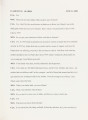
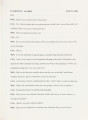
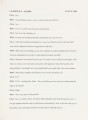
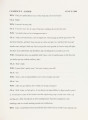
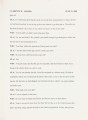
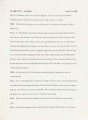
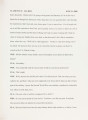
Show L L WI Th y just pull d th min out ofth ship and acr th b h? CLA: Right. WIN: It wasn tan easy task. CLA: It wasn't easy. No, it wasn't. The tires would go down into the sand. WIN: You had to have a lot of manpower into it. 2 CLA: Yeah, you had to have a lot of manpower. They'd gang up all the gun crews. We had four batteries, and they'd go one gun at a time and get it in and then they'd go get another one, and get it back up. Once you get the coral ground it'd move along all right, but there were shell holes and shrubbery and everything else you had to go over. WIN: During this time, you probably didn't have a lot of machine gun or rifle fire, but you had to put up with the artillery, huh? CLA: That's right. WIN: I guess that's pretty scary. You were twenty years old? CLA: Yes. WIN: That's a lot of responsibility, isn't it, for a twenty year old? CLA: Yes. WIN: After you got ashore, how would you set up your guns? CLA: Well, when we first got in, it was almost an impossibility to dig a trench to put it in. We did have some of the Seabees and the engineering corps would come with a cat and dig out a little bit and put us down underground. Then they supplied us with sandbags, and we would sandbag around our installations. 0 WIN: They would build a berm around after they hollowed out a little ways and put your |
| Reference URL |
https://collections.lib.utah.edu/ark:/87278/s6kw7f9t/1021378 |