| Title |
Ray H. Church, Ogden, Utah: an interview by Winston P. Erickson, June 12, 2000: Saving the legacy tape no. 39 |
| Alternative Title |
Ray H. Church, Saving the legacy: an oral history of Utah's World War II veterans, ACCN 2070, American West Center, University of Utah |
| Creator |
Church, Ray H., 1920-2013 |
| Contributor |
Erickson, Winston P., 1943-; University of Utah. American West Center |
| Publisher |
Digitized by J. Willard Marriott Library, University of Utah |
| Date |
2000-06-12 |
| Date Digital |
2015-09-16 |
| Access Rights |
I acknowledge and agree that all information I obtain as a result of accessing any oral history provided by the University of Utah's Marriott Library shall be used only for historical or scholarly or academic research purposes, and not for commercial purposes. I understand that any other use of the materials is not authorized by the University of Utah and may exceed the scope of permission granted to the University of Utah by the interviewer or interviewee. I may request permission for other uses, in writing to Special Collections at the Marriott Library, which the University of Utah may choose grant, in its sole discretion. I agree to defend, indemnify and hold the University of Utah and its Marriott Library harmless for and against any actions or claims that relate to my improper use of materials provided by the University of Utah. |
| Spatial Coverage |
Delta, Millard County, Utah, United States; Guam; Japan |
| Subject |
Church, Ray H., 1920-2013--Interviews; World War, 1939-1945--Personal narratives, American; Veterans--Utah--Biography; World War, 1939-1945--Concentration camps--Japan; World War, 1939-1945--Campaigns--Pacific Area--Personal narratives, American; World War, 1939-1945--Prisoners and prisons, American |
| Keywords |
Marines; Prisoners of war; Tanagawa; Death camp; Osaka |
| Description |
Transcript (32 pages) of an interview by Winston P. Erickson with Ray H. Church on June 12, 2001. This is from tape number 39 in the "Saving the Legacy Oral History Project |
| Collection Number and Name |
Accn2070, Saving the Legacy oral history project, 2001-2010 |
| Abstract |
Ray Church (b. 1920) recalls his childhood in Depression-era Delta, Utah. After two and a half years at Dixie College, he found himself without funds and joined the Marines. He was posted to Guam in 1941 and attached to the military government. He was taken prisoner in December, shortly after Pearl Harbor. Church describes his time as a prisoner of war in Tanagawa, known as the "death camp," and in Osaka. 32 pages. |
| Type |
Text |
| Genre |
oral histories (literary works) |
| Format |
application/pdf |
| Extent |
32 pages |
| Language |
eng |
| Rights |
 |
| Scanning Technician |
Mazi Rakhsha |
| Conversion Specifications |
Original scanned with Kirtas 2400 and saved as 400 ppi uncompressed TIFF. PDF generated by Adobe Acrobat Pro X for CONTENTdm display |
| ARK |
ark:/87278/s6sf4vft |
| Topic |
Personal narratives--American; Veterans; World War (1939-1945); Prisoners of war; Concentration camps |
| Setname |
uum_slohp |
| ID |
1020845 |
| Reference URL |
https://collections.lib.utah.edu/ark:/87278/s6sf4vft |
| Title |
Page 10 |
| Format |
application/pdf |
| Setname |
uum_slohp |
| ID |
1020820 |
| OCR Text |
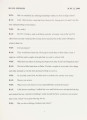
Show R H 2 WIN: o this was on December 7 in the aft moon? RAY: December 8, out there. WIN: Was it on the other side of the date line? RAY: We just barely heard before our communications were knocked out. One of our first guys killed was up on Radio Hill and our communications were knocked out. So w had to go along there a little blinded. We didn't know what was coming around or what after that first day. But they didn't take long. They swarmed in on us. I used to laugh at the guys, they would say-you know we had nine fellows there, nine marines-they landed 3500 troops so it was a fair fight. WIN: RAY: WIN: RAY: WIN: RAY: Those were good odds. A fair fight until we ran out of ammunition, which we did. Oh, you did? We ran out of ammunition. You held them off until you ran out of ammunition. They kept coming. I mean, they swung around on both sides, they flanked us on both sides. Anyway, this is the thing that, when I was interrogated when we got back, I didn't give the order to surrender. I didn't say surrender. I was told to surrender. The commanding officer of the island said, "We are surrendering." We had three American nurses in the hospital there in charge of the hospital, working in the hospital, and that was his concern that it would probably be a pretty bad time, so he gave the order to surrender. 9 |
| Reference URL |
https://collections.lib.utah.edu/ark:/87278/s6sf4vft/1020820 |