| Title |
Joe Tobari, Salt Lake City, Utah: an interview by Becky B. Lloyd, May 30, 2001: Saving the legacy tape no. 250 |
| Alternative Title |
Joseph Tobari, Saving the legacy: an oral history of Utah's World War II veterans, ACCN 2070, American West Center, University of Utah |
| Creator |
Tobari, Joseph, 1924-2004 |
| Contributor |
Lloyd, Becky B.; University of Utah. American West Center |
| Publisher |
Digitized by J. Willard Marriott Library, University of Utah |
| Date |
2001-05-30 |
| Date Digital |
2015-09-16 |
| Access Rights |
I acknowledge and agree that all information I obtain as a result of accessing any oral history provided by the University of Utah's Marriott Library shall be used only for historical or scholarly or academic research purposes, and not for commercial purposes. I understand that any other use of the materials is not authorized by the University of Utah and may exceed the scope of permission granted to the University of Utah by the interviewer or interviewee. I may request permission for other uses, in writing to Special Collections at the Marriott Library, which the University of Utah may choose grant, in its sole discretion. I agree to defend, indemnify and hold the University of Utah and its Marriott Library harmless for and against any actions or claims that relate to my improper use of materials provided by the University of Utah. |
| Spatial Coverage |
Italy; Salt Lake City, Salt Lake County, Utah, United States |
| Subject |
Tobari, Joseph, 1924-2004--Interviews; World War, 1939-1945--Personal narratives, American; World War, 1939-1945--Personal narratives, Japanese American; World War, 1939-1945--Participation, Japanese American; World War, 1939-1945--Military operations, American; World War, 1939-1945--Campaigns--Europe, Southern--Personal narratives, American; Veterans--Utah--Biography |
| Description |
Transcript (26 pages) of an interview by Becky B. Lloyd with Joseph Tobari on May 30, 2001. This is from tape number 250 in the "Saving the Legacy Oral History Project |
| Collection Number and Name |
Accn2070, Saving the Legacy oral history project, 2001-2010 |
| Abstract |
Joseph Tobari (b. 1924) grew up in Salt Lake City. He discusses the discrimination he faced as a Japanese-American high school student after Pearl Harbor. He joined the Army in 1943 as a member of the 442nd Regimental Combat Team. He served in Italy, and later worked as a graphic artist for the Salt Lake Tribune and elsewhere in Salt Lake City. 26 pages. |
| Type |
Text |
| Genre |
oral histories (literary works) |
| Format |
application/pdf |
| Extent |
26 pages |
| Language |
eng |
| Rights |
 |
| Scanning Technician |
Mazi Rakhsha |
| Conversion Specifications |
Original scanned with Kirtas 2400 and saved as 400 ppi uncompressed TIFF. PDF generated by Adobe Acrobat Pro X for CONTENTdm display |
| ARK |
ark:/87278/s6h43qqs |
| Topic |
Personal narratives--American; Veterans; World War (1939-1945); Japanese Americans |
| Setname |
uum_slohp |
| ID |
1020664 |
| Reference URL |
https://collections.lib.utah.edu/ark:/87278/s6h43qqs |
| Title |
Page 26 |
| Format |
application/pdf |
| Setname |
uum_slohp |
| ID |
1020659 |
| OCR Text |
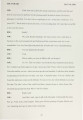
Show JO TOB RI 3 2001 BBL: Go ahead. JOE: My father's from a very highly educated fru11ily. h y'r all c llcg professors and, in fact, in brother, older brother devised a Japan s - erman dicti nary that all students use. So he's a highly respected professor of Gennan and his broth rs ar all highly educated. He isn't. My father wasn't. He came to this country as a young n1an, didn't have the education, but all his brothers are highly educated. BBL: Yeah. And were a lot of family members killed when the United States dropped the bomb on Hiroshima? JOE: I really can't tell you because I don't communicate with them. The only time l-one brother, that's the German professor, he went to German and stayed there for two years and then prior to going back to Japan he came to the United States to visit us and he stayed with us for one week. And that's the only time I met any of my living-Oh, then one other cousin frmn Japan came and he was in the Japanese Imperial Army and he was a colonel in the Japanese army and he studied for two years at Fort Sill, Oklahoma. Then prior to going back he stayed one week with us, too. So those are the only two living relatives I ever met. BBL: Oh, I see. JOE: The others are just hearsay. BBL: Yeah. I wanted to ask you, also, a lot of people I talk to, after the war was over with, their parents did better economically. They improved their situation in life. Was that true with your parents? JOE: Well this I have a mixed comment on. I'm Nisei and the Japanese got ' kicked off the West coast, wartime, because of President Roosevelt's presidential order 22 |
| Reference URL |
https://collections.lib.utah.edu/ark:/87278/s6h43qqs/1020659 |