| Title |
Dennis Johnson, Salt Lake City, Utah: an interview by Becky B. Lloyd, November 30, 2001: Saving the legacy tape no. 416 and 417 |
| Alternative Title |
Dennis Johnson, Saving the legacy: an oral history of Utah's World War II veterans, ACCN 2070, American West Center, University of Utah |
| Creator |
Johnson, Dennis, 1921-2004 |
| Contributor |
Lloyd, Becky B.; University of Utah. American West Center |
| Publisher |
Digitized by J. Willard Marriott Library, University of Utah |
| Date |
2001-09-30 |
| Date Digital |
2015-09-16 |
| Access Rights |
I acknowledge and agree that all information I obtain as a result of accessing any oral history provided by the University of Utah's Marriott Library shall be used only for historical or scholarly or academic research purposes, and not for commercial purposes. I understand that any other use of the materials is not authorized by the University of Utah and may exceed the scope of permission granted to the University of Utah by the interviewer or interviewee. I may request permission for other uses, in writing to Special Collections at the Marriott Library, which the University of Utah may choose grant, in its sole discretion. I agree to defend, indemnify and hold the University of Utah and its Marriott Library harmless for and against any actions or claims that relate to my improper use of materials provided by the University of Utah. |
| Spatial Coverage |
Salt Lake City, Salt Lake County, Utah, United States; Germany; Korea |
| Subject |
Johnson, Dennis, 1921-2004--Interviews; World War, 1939-1945--Personal narratives, American; World War, 1939-1945--Campaigns--Europe, Northern--Personal narratives, American; Veterans--Utah--Biography |
| Description |
Transcript (63 pages) of an interview by Becky B. Lloyd with Dennis Johnson on November 30, 2001. This is from tape numbers 416 and 417 in the "Saving the Legacy Oral History Project |
| Collection Number and Name |
Accn2070, Saving the Legacy oral history project, 2001-2010 |
| Abstract |
Dennis Johnson (b. 1921) recalls being in ROTC at East High and the University of Utah. After graduation from the university, he was trained at Fort Sill and then assigned as a forward observer to the Fourth Infantry Division, which served in Europe. He recalls his experiences in Germany and his time in Korea. 63 pages. |
| Type |
Text |
| Genre |
oral histories (literary works) |
| Format |
application/pdf |
| Extent |
63 pages |
| Language |
eng |
| Rights |
 |
| Scanning Technician |
Mazi Rakhsha |
| Conversion Specifications |
Original scanned with Kirtas 2400 and saved as 400 ppi uncompressed TIFF. PDF generated by Adobe Acrobat Pro X for CONTENTdm display |
| ARK |
ark:/87278/s67s9mz1 |
| Topic |
Personal narratives--American; Veterans; World War (1939-1945) |
| Setname |
uum_slohp |
| ID |
1020112 |
| Reference URL |
https://collections.lib.utah.edu/ark:/87278/s67s9mz1 |
| Title |
Page 29 |
| Format |
application/pdf |
| Setname |
uum_slohp |
| ID |
1020075 |
| OCR Text |
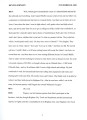
Show DENNIS JOHNSON NOVEMBER 30, 2001 BEC: He was in one of the towns that you came to? DEN: Yeah, we got him somehow; the infantry got him. Didn't kill him. He became a prisoner of war. Most of the soldiers we got were prisoners. They didn't shoot them, I mean, unless they were shooting back at you. The artillery was, as I say, more impersonal. You weren't shooting at people, you were shooting at buildings and dug-in places, stuff like that. BEC: DEN: BEC: Right, guns and such. Yeah. What about, do you remember much of coming across German people, just some of the village folks there? DEN: The village people were very nice. We'd get into a house and a lot of times the old lady there would fix us a big tub of hot water so we could take a bath. That's the only bath we ever got. I bathed many times in cold streams with snow on the ground, just to get clean. You begin to smell your own smell (laughs); pretty rough. But back at the battery you had no facilities, unless you were in a town. And so the people were very nice to you. I think a lot of them were glad to see us. They acted that way. But there were no men around. They were all in the Werhmacht. At that point, the Werhmacht consisted of old men and young, very young men. All the middle-aged men were prisoners by then and they were just fighting in desperation at that time with whatever they had. So they were just treated as prisoners of war; herded into a pen. The artillery really didn't get involved in that; the infantry took care of that part of it. We didn't see the prisoners or anything from the artillery side. Then when the war ended, I can't remember where we were. That little book doesn't even tell you. Let's see here- 27 |
| Reference URL |
https://collections.lib.utah.edu/ark:/87278/s67s9mz1/1020075 |