| Title |
Gilbert H. Iker, Salt Lake City, Utah: an interview by Winston P. Erickson, October 17th & 18th, 2002: Saving the legacy tape no. 518, 519, and 520 |
| Alternative Title |
Gilbert Iker, Saving the legacy: an oral history of Utah's World War II veterans, ACCN 2070, American West Center, University of Utah |
| Creator |
Iker, Gilbert, 1927-2015 |
| Contributor |
Erickson, Winston P., 1943-; University of Utah. American West Center |
| Publisher |
Digitized by J. Willard Marriott Library, University of Utah |
| Date |
2002-10-17; 2002-10-28 |
| Date Digital |
2015-09-16 |
| Access Rights |
I acknowledge and agree that all information I obtain as a result of accessing any oral history provided by the University of Utah's Marriott Library shall be used only for historical or scholarly or academic research purposes, and not for commercial purposes. I understand that any other use of the materials is not authorized by the University of Utah and may exceed the scope of permission granted to the University of Utah by the interviewer or interviewee. I may request permission for other uses, in writing to Special Collections at the Marriott Library, which the University of Utah may choose grant, in its sole discretion. I agree to defend, indemnify and hold the University of Utah and its Marriott Library harmless for and against any actions or claims that relate to my improper use of materials provided by the University of Utah. |
| Spatial Coverage |
Germany; Michigan, United States; Salt Lake City, Salt Lake County, Utah, United States |
| Subject |
Iker, Gilbert, 1927-2015--Interviews; World War, 1939-1945--Personal narratives, American; Veterans--Utah--Biography; United States--Army--Corps of Engineers; World War, 1939-1945--Naval operations, American |
| Description |
Transcript (106 pages) of an interview by Winston P. Erickson with Gilbert H. Iker on October 17 and 18, 2002. This is from tape numbers 518, 519, and 520 in the "Saving the Legacy Oral History Project |
| Collection Number and Name |
Accn2070, Saving the Legacy oral history project, 2001-2010 |
| Abstract |
Gilbert Iker (b. 1927) describes his childhood and youth in Detroit, his father's involvement in an Army Corps of Engineers Reserve Unit prior to the war, and life on various bases after his father was called to active duty. He reminisces about his high school years at East High in Salt Lake City, when his father was stationed in Kearns. He joined the Navy in 1945 and was in basic training at the Great Lakes Naval Training Station when the war ended. He was stationed near Hayward, California until his discharge in 1946. He returned to Utah and entered the University where he joined the Air Force ROTC. Following graduation he served in Germany with the Air Force and transferred to the United States Army in 1962. He remained in the Army until 1983. Other topics discussed include the history and mission of the Special Forces, the CIA, NATO war games, and the Vietnam war. 106 pages. |
| Type |
Text |
| Genre |
oral histories (literary works) |
| Format |
application/pdf |
| Extent |
106 pages |
| Language |
eng |
| Rights |
 |
| Scanning Technician |
Mazi Rakhsha |
| Conversion Specifications |
Original scanned with Kirtas 2400 and saved as 400 ppi uncompressed TIFF. PDF generated by Adobe Acrobat Pro X for CONTENTdm display |
| ARK |
ark:/87278/s6d23wv1 |
| Topic |
Personal narratives--American; Veterans; World War (1939-1945); Military operations, Naval--American; United States. Army. Corps of Engineers |
| Setname |
uum_slohp |
| ID |
1019862 |
| Reference URL |
https://collections.lib.utah.edu/ark:/87278/s6d23wv1 |
| Title |
Page 24 |
| Format |
application/pdf |
| Setname |
uum_slohp |
| ID |
1019777 |
| OCR Text |
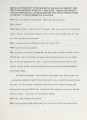
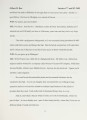
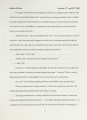
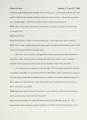
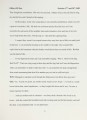
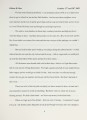
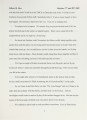
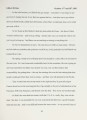
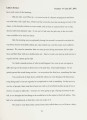
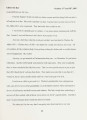
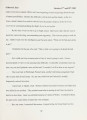
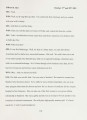
Show Gilbert H. lker Octob 2 th We'd mimic their goose-steps - that was the way they march d - and m d fun of that Charlie Chaplain had a movie of that time -I can t remember what they call d it- in which he played Hitler as a buffoon and we loved that movie. I bet I saw it ten times. So I guess we were just, it was becoming a big part of our life and we were getting broadcasts from England, radio broadcasts. Edward R. Murrow was coming in; he had a great voice. So we'd get our news that way and then in the spring, I guess, of '40, the Germans attacked and basically outflanked the Maginot Line, went through the low countries and all of a sudden France fell. It was an awful, awful thing. The British evacuated their troops from Dunkirk and it was incredible. It was very frightening. And the talk around the house, if it ever had been "if we go to war," it had been long since changed to "when we go to war." Anyway, the summer of 1940, my father, who was an engineer in the Corps of Engineers of the Army, was mobilized and he had orders, which transferred him to the old brown shoe Army Air Corps from the Engineers. At the time, I didn't understand much about that, didn't much care really, but that seemed to be significant. So we were called up and we moved to a little town of Mascoutah, Illinois, and my dad was at Scott Field, which is now Scott Air Force Base, just across the river from St. Louis. In any event, I can remember that summer in this little town of Mascoutah - it had about 2,000 people at the most; a lot of German people- and I was a minor league 22 |
| Reference URL |
https://collections.lib.utah.edu/ark:/87278/s6d23wv1/1019777 |