| Title |
Harold R. Heath, Salt Lake City, Utah: an interview by Winston P. Erickson, May 30, 2000: Saving the legacy tape no. 29 and 30 |
| Alternative Title |
Harold R. Heath, Saving the legacy: an oral history of Utah's World War II veterans, ACCN 2070, American West Center, University of Utah |
| Creator |
Heath, Harold R., 1923- |
| Contributor |
Erickson, Winston P., 1943-; University of Utah. American West Center |
| Publisher |
Digitized by J. Willard Marriott Library, University of Utah |
| Date |
2000-05-30 |
| Date Digital |
2015-09-16 |
| Access Rights |
I acknowledge and agree that all information I obtain as a result of accessing any oral history provided by the University of Utah's Marriott Library shall be used only for historical or scholarly or academic research purposes, and not for commercial purposes. I understand that any other use of the materials is not authorized by the University of Utah and may exceed the scope of permission granted to the University of Utah by the interviewer or interviewee. I may request permission for other uses, in writing to Special Collections at the Marriott Library, which the University of Utah may choose grant, in its sole discretion. I agree to defend, indemnify and hold the University of Utah and its Marriott Library harmless for and against any actions or claims that relate to my improper use of materials provided by the University of Utah. |
| Spatial Coverage |
Germany; Salt Lake County, Utah, United States |
| Subject |
Heath, Harold R., 1923- --Interviews; World War, 1939-1945--Personal narratives, American; Veterans--Utah--Biography; World War, 1939-1945--Military operations, American; World War, 1939-1945--Campaigns--Europe, Northern--Personal narratives, American |
| Keywords |
90th Chemical Mortar Division, B Company, 1st Division, 1st Army; Fort Bragg, North Carolina; Heurtgen Forest; Remagen Bridge; Ruhr Pocket; Occupation duty; Nurenberg, Germany; Occupied Germany |
| Description |
Transcript (45 pages) of an interview by Winston P. Erickson with Harold R. Heath on May 30, 2000. This is from tape numbers 29 and 30 in the "Saving the Legacy Oral History Project |
| Collection Number and Name |
Accn2070, Saving the Legacy oral history project, 2001-2010 |
| Abstract |
Mr. Heath (b. 1923) discusses growing up in Holladay, Utah, during the Depression. He talks about his father's involvemnt in World War I. He participated in ROTC at the University of Utah and was inducted into the army in April 1943. He received training at Camp Sibert, Alabama and attended ASTP at the University of Pittsburgh before being assigned to the 90th Chemical Mortar Division, B Company, 1st Division, 1st Army, at Fort Bragg, North Carolina. He recounts combat experiences in Heurtgen Forest, Remagen Bridge, and the Ruhr pocket. He also discusses occupation duty in Nurenberg, Germany before being discharged in March 1946. He also gives an account of his career as a chemical engineer with Mountain Fuel Supply Company. 45 pages. |
| Type |
Text |
| Genre |
oral histories (literary works) |
| Format |
application/pdf |
| Extent |
45 pages |
| Language |
eng |
| Rights |
 |
| Scanning Technician |
Mazi Rakhsha |
| Conversion Specifications |
Original scanned with Kirtas 2400 and saved as 400 ppi uncompressed TIFF. PDF generated by Adobe Acrobat Pro X for CONTENTdm display |
| ARK |
ark:/87278/s699068g |
| Topic |
Personal narratives--American; Veterans; World War (1939-1945) |
| Setname |
uum_slohp |
| ID |
1019182 |
| Reference URL |
https://collections.lib.utah.edu/ark:/87278/s699068g |
| Title |
Page 28 |
| Format |
application/pdf |
| Setname |
uum_slohp |
| ID |
1019163 |
| OCR Text |
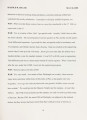
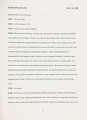
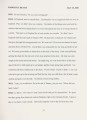
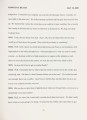
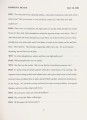
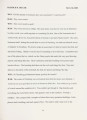
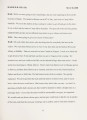
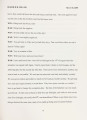
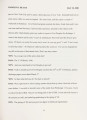
Show AROLD R. HEAT WIN: You were part of the chemical artillery what kind f ch m · c 1 th r th did you use? Did you use any, or was smoke the extent of it oth r th y ur high explosives? HAR: There were two munitions, the high explosive and the white phosphorous smok . However, they used white phosphorous when the opposing troops were dug in. They d often show them the white phosphorous to get them out of the fox holes because white phosphorous was semi-solid, and if it hit them, it would set the clothes on fire and burn them. They hated it. The Germans, apparently, didn't have any. We never had any incoming, but we fired a lot at them. WIN: So white phosphorous, smoke, and then your high explosives? HAR: White phosphorous was our smoke. WIN: Oh, that was the smoke. Did you use that for concealment purposes, too? HAR: To mask troop movement and also when they would make a river crossing. The engineers had to bring up and work behind some, and it gave them cover to haul in their pontoon boats, and place them in place and lash them together, and put the treads down for the bridge. We smoked crossing the Roer River and crossing the Rhine, crossing the Danube and two or three other small rivers. ' WIN: Do you know where you crossed the Rhine? HAR: We crossed the Rhine at Remagen. WIN: Oh Remagen, the famous place? 27 |
| Reference URL |
https://collections.lib.utah.edu/ark:/87278/s699068g/1019163 |