| Title |
Evan Olsen, Salt Lake City, Utah: an interview by Becky B. Lloyd, April 16, 2002: Saving the legacy tape no. 443 and 444 |
| Alternative Title |
Evan Olsen, Saving the legacy: an oral history of Utah's World War II veterans, ACCN 2070, American West Center, University of Utah |
| Creator |
Olsen, Evan, 1921-2002 |
| Contributor |
Lloyd, Becky B.; University of Utah. American West Center |
| Publisher |
Digitized by J. Willard Marriott Library, University of Utah |
| Date |
2002-04-16 |
| Date Digital |
2015-09-16 |
| Access Rights |
I acknowledge and agree that all information I obtain as a result of accessing any oral history provided by the University of Utah's Marriott Library shall be used only for historical or scholarly or academic research purposes, and not for commercial purposes. I understand that any other use of the materials is not authorized by the University of Utah and may exceed the scope of permission granted to the University of Utah by the interviewer or interviewee. I may request permission for other uses, in writing to Special Collections at the Marriott Library, which the University of Utah may choose grant, in its sole discretion. I agree to defend, indemnify and hold the University of Utah and its Marriott Library harmless for and against any actions or claims that relate to my improper use of materials provided by the University of Utah. |
| Spatial Coverage |
New Zealand; Ulithi, Caroline Islands; Salt Lake City, Salt Lake County, Utah, United States |
| Subject |
Olsen, Evan, 1921-2002--Interviews; World War, 1939-1945--Personal narratives, American; World War, 1939-1945--Naval operations, American; World War, 1939-1945--Campaigns--Pacific Area--Personal narratives, American; World War, 1939-1945--Medical care; Veterans--Utah--Biography |
| Keywords |
Mobile hospital; Medics; ACORN |
| Description |
Transcript (48 pages) of an interview by Becky B. Lloyd with Evan Olsen on April 16, , 2002. This is from tape numbers 443 and 444 in the "Saving the Legacy Oral History Project |
| Collection Number and Name |
Accn2070, Saving the Legacy oral history project, 2001-2010 |
| Abstract |
Before enlisting in the Navy in 1942, Evan Olsen (b. 1921) worked for Western Union Telegraph in Salt Lake City, Utah. He was trained at the Naval Medical School in Balboa Park, and then served as a pharmacist's mate at the New Zealand Naval Hospital and as a medical officer on a submarine chaser on Ulithi. 48 pages. |
| Type |
Text |
| Genre |
oral histories (literary works) |
| Format |
application/pdf |
| Extent |
47 pages |
| Language |
eng |
| Rights |
 |
| Scanning Technician |
Mazi Rakhsha |
| Conversion Specifications |
Original scanned with Kirtas 2400 and saved as 400 ppi uncompressed TIFF. PDF generated by Adobe Acrobat Pro X for CONTENTdm display |
| ARK |
ark:/87278/s6x949hz |
| Topic |
Personal narratives--American; Veterans; World War (1939-1945); Military operations, Naval--American |
| Setname |
uum_slohp |
| ID |
1018970 |
| Reference URL |
https://collections.lib.utah.edu/ark:/87278/s6x949hz |
| Title |
Page 34 |
| Format |
application/pdf |
| Setname |
uum_slohp |
| ID |
1018954 |
| OCR Text |
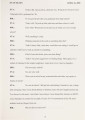
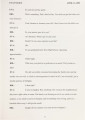
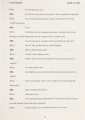
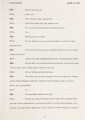
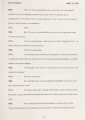
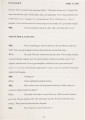
Show EVANOL EN R 1 2 2 EVA: No no. We were a submarine station now. [turning pag ] Somewhere here there's-isn't that a good-looking guy? When I had my radio pr gram in New Zealand I had to park real close to the back door. BBL: EVA: BBL: EVA: Because-? Oh, those crazy women. I was a radio celebrity, you know. You had to dive into your car when you came out of the radio station? Yeah. This is Ulithi here. There's 1,500 ships in there getting ready for the invasion of Japan. They had armadas like this up in the Aleutians and the Philippines and here in Ulithi. Our job, it was centered in the middle of several little atolls, and they evacuated all the natives onto one atoll. And on one atoll they leveled off for navy Grumman planes and they strung submarine nets between the atolls. We were sixty miles away from Yap, the big Japanese base, and we got to see them quite often. But we'd go out for five days and do what they call pinging with the sonar. BBL: Ping, like P-I-N-G? EVA: Yeah, the radiomen could hear the sound and they could tell if it was a whale or a reef or if it was metal. If it was metal, then he'd send down requesting the day's code, it changed every day. And if they didn't have the right code we started dropping ash cans. That's big, like fifty-gallon drums. One off the stem and firing one off each side, laid out a pattern. It could have been some of our ships, they just didn't have the code. Talk about friendly fire, there's a lot of it. BBL: So that happened? They wouldn't come back with the proper code or they wouldn't respond? 33 |
| Reference URL |
https://collections.lib.utah.edu/ark:/87278/s6x949hz/1018954 |