| OCR Text |
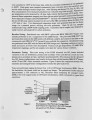
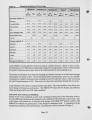
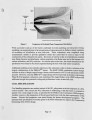
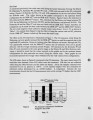
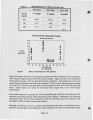
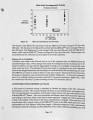
Show Table 3: Size Distribution of Illinois #6 test Coal 75% Test 82% Test 92% Test Screen % smaller I % smaller % smaller (mesh) #50 99.97 99.96 100 100 I 97.7 98.8 99.8 200 75.2 81.9 91.9 Pilot-Scale Developmental Testing Preliminary Results 2150 I 10 II ~ I 3 ~ 5 ~ i %NOx 0 I ~ Reduction i -5 ~ ~ ~ 0 -10 ~ ~ ~ I_ AVerage~ ~ -IS -20 74 76 78 80 82 84 86 88 90 92 94 Coal Fineness (% < 200 mesh) Figure 9 Effect of Coal Fineness on NO. Emission Figure 10 illustrates the effect of coal fineness on unburned carbon (measured as loss on ignition), while firing the staged advanced 10w-NOx burner unstaged. Again, all values were normalized to the baseline average at 75% less than 200 mesh for comparison. This graph shows that as the coal fineness level increased, the LOI values decreased. The LOI values decreased approximately 3% from 75% to 82% less than 200 mesh, and decreased 26% from 75% to 92% less than 200 mesh. Similar trends were noted for the burner when staged from 1.16 to 0.85 burner stoichiometry. In an overali comparison, by going from 75% less than 200 mesh to 82% less than 200 mesh, NOx emissions were greatly reduced, while reducing LO! values slightly. Furthermore, by increasing coal fineness from 75% less than 200 mesh to 92% less than 200 mesh, NOx emissions were unchanged, while LO! values were greatly reduced. Although coal fineness was not a variable tested during the first series of subsystem tests, it should be noted that there were differences in the coal fineness for the coals and burners tested. Page -14 |