| Title |
Wilson G. Wright, St. George, Utah: an interview by Winston Erickson, August 3, 2000: Saving the legacy tape no. 84 and 85 |
| Alternative Title |
Wilson G. Wright, Saving the legacy: an oral history of Utah's World War II veterans, ACCN 2070, American West Center, University of Utah |
| Creator |
Wright, Wilson G., 1916- |
| Contributor |
Erickson, Winston P., 1943-; University of Utah. American West Center |
| Publisher |
Digitized by J. Willard Marriott Library, University of Utah |
| Date |
2000 |
| Date Digital |
2015-09-16 |
| Access Rights |
I acknowledge and agree that all information I obtain as a result of accessing any oral history provided by the University of Utah's Marriott Library shall be used only for historical or scholarly or academic research purposes, and not for commercial purposes. I understand that any other use of the materials is not authorized by the University of Utah and may exceed the scope of permission granted to the University of Utah by the interviewer or interviewee. I may request permission for other uses, in writing to Special Collections at the Marriott Library, which the University of Utah may choose grant, in its sole discretion. I agree to defend, indemnify and hold the University of Utah and its Marriott Library harmless for and against any actions or claims that relate to my improper use of materials provided by the University of Utah. |
| Spatial Coverage |
Ogden, Weber County, Utah, United States; Guadalcanal, Solomon Islands |
| Subject |
Wright, Wilson G., 1916- --Interviews; World War, 1939-1945--Personal narratives, American; Veterans--Utah--Biography; World War, 1939-1945--Naval operations, American; World War, 1939-1945--Campaigns--Pacific Area--Personal narratives, American; Guadalcanal, Battle of, Solomon Islands, 1942-1943--Personal narratives, American |
| Description |
Transcript (51 pages) of an interview by Winston P. Erickson with Wilso G. Wright on August 3, 2000. This is from tape numbers 84 and 85 in the "Saving the Legacy Oral History Project |
| Collection Number and Name |
Accn2070, Saving the Legacy oral history project, 2001-2010 |
| Abstract |
Wilson Wright (b. 1916) recalls his childhood in Ogden, Utah. He graduated from the U.S. Naval Academy with a B.S. in engineering and served as a commissioned officer on the battleship Idaho and the destroyer Lamson before going to Pensacola, Florida, for flight training. After qualifying for carrier landings he was assigned to the fighter squadron of the Wasp, where he provided air support for the Marines at Guadalcanal. He was on the Wasp when it was torpedoed and was in the water for four hours until being picked up by the destroyer Laffey. Wright's second tour of combat was with a fighter squadron based with the Marines in the Solomon Islands. He flew with such notables as "Gunner" Walsh and "Pappy" Boyington. He remained in the Navy for several years. After retirement he worked in the aerospace industry on the Polaris, Moon Landing, and Space Shuttle programs. 51 pages. |
| Type |
Text |
| Genre |
oral histories (literary works) |
| Format |
application/pdf |
| Extent |
51 pages |
| Language |
eng |
| Rights |
 |
| Scanning Technician |
Mazi Rakhsha |
| Conversion Specifications |
Original scanned with Kirtas 2400 and saved as 400 ppi uncompressed TIFF. PDF generated by Adobe Acrobat Pro X for CONTENTdm display |
| ARK |
ark:/87278/s6573b9s |
| Topic |
Personal narratives--American; Veterans; World War (1939-1945); Military operations, Naval--American; Guadalcanal, Battle of (Solomon Islands : 1942-1943) |
| Setname |
uum_slohp |
| ID |
1018555 |
| Reference URL |
https://collections.lib.utah.edu/ark:/87278/s6573b9s |
| Title |
Page 8 |
| Format |
application/pdf |
| Setname |
uum_slohp |
| ID |
1018509 |
| OCR Text |
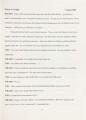
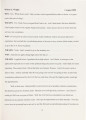
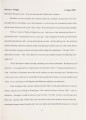
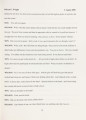
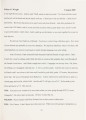
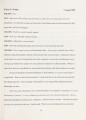
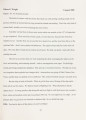
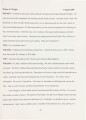
Show Wil on G. Wright u u t 2000 wanting to become a naval aviator. Well, in those days the only way you could become a naval aviator was to graduat from the naval academy first. And then, after two years in ships you could then go to flight training. Now that changed in about 1936. In 1936 they started taking college graduates and running them through flight training, and they came out into the fleet, but not as commissioned officers. They were still called cadets. They wore a lieutenant junior grade half stripe. But in 1939 they made those guys ensigns, which is the lowest commissioned officer. And graduates from flight training from that point on came out as commissioned officers. So, I think the desire to become a naval aviator, and then the influence of Arthur Manning, and seeing all that stuff made me determined that I wanted to go to the naval academy. And all of the courses that I took in school that I had any choice in were those that would help me towards that goal. WIN: Well, let's go back to your family again. How many brothers and sisters did you have? WILSON: I have a brother. I had-there was a sister ahead of me, and that sister died shortly after birth. Her name was Norma. And then I was next. And then I have a sister who is five years younger than I am, and I have a brother who is thirteen years younger than I am. They've been extremely successful financially. They're in the millionaire class, and I'm the bad sheep of the family in that regard. WIN: Well, I don't think anybody can complain about what you've done. And so you grew up, and when you went on these vacations did you go on the railroad because your father worked for the railroad? 6 |
| Reference URL |
https://collections.lib.utah.edu/ark:/87278/s6573b9s/1018509 |