| Title |
Sam Liner, Murray, Utah: an interview by Becky B. Lloyd, September 23, 2004: Saving the legacy tape no. 715 |
| Alternative Title |
Sam Liner, Saving the legacy: an oral history of Utah's World War II veterans, ACCN 2070, American West Center, University of Utah |
| Creator |
Liner, Sam, 1921-2008 |
| Contributor |
Lloyd, Becky B.; University of Utah. American West Center |
| Publisher |
Digitized by J. Willard Marriott Library, University of Utah |
| Date |
2004-09-23 |
| Date Digital |
2015-09-16 |
| Access Rights |
I acknowledge and agree that all information I obtain as a result of accessing any oral history provided by the University of Utah's Marriott Library shall be used only for historical or scholarly or academic research purposes, and not for commercial purposes. I understand that any other use of the materials is not authorized by the University of Utah and may exceed the scope of permission granted to the University of Utah by the interviewer or interviewee. I may request permission for other uses, in writing to Special Collections at the Marriott Library, which the University of Utah may choose grant, in its sole discretion. I agree to defend, indemnify and hold the University of Utah and its Marriott Library harmless for and against any actions or claims that relate to my improper use of materials provided by the University of Utah. |
| Spatial Coverage |
India; Louisiana, United States; Texas, United States; California, United States; Idaho, United States; Utah, United States |
| Subject |
Liner, Sam, 1921-2008--Interviews; World War, 1939-1945--Personal narratives, American; Veterans--Utah--Biography; World War, 1939-1945--Aerial operations, American; World War, 1939-1945--Campaigns--Asia |
| Description |
Transcript (56 pages) of an interview by Becky B. Lloyd with Sam Liner on September 23, 2004. This is from tape numbers 715.1 and 715.2 in the "Saving the Legacy Oral History Project |
| Collection Number and Name |
Accn2070, Saving the Legacy oral history project, 2001-2010 |
| Abstract |
Sam Liner (b. 1921) recalls growing up in Depression-era Louisiana. He joined the Army Air Corps in August 1940, but problems with depth perception forced him out. He attended Officer Candidate School, graduating in 1943. He details his trip across the Atlantic and around to India, where he was assigned to a practice base for the 7th Bomb Group. His job was supervising a crew of 250 civilians in site cleanup, and settling wrongful death claims with civilians. He was later transferred to Dacca, where his group helped supply fuel for flying the "Hump." Liner was discharged in 1945. He discusses working for a Texas oil field supply company and as a car salesman in Texas, California, Idaho, and Utah. 56 pages. |
| Type |
Text |
| Genre |
oral histories (literary works) |
| Format |
application/pdf |
| Extent |
56 pages |
| Language |
eng |
| Rights |
 |
| Scanning Technician |
Mazi Rakhsha |
| Conversion Specifications |
Original scanned with Kirtas 2400 and saved as 400 ppi uncompressed TIFF. PDF generated by Adobe Acrobat Pro X for CONTENTdm display |
| ARK |
ark:/87278/s6zk7fx6 |
| Topic |
Personal narratives--American; Veterans; World War (1939-1945); Military operations, Aerial--American |
| Setname |
uum_slohp |
| ID |
1018407 |
| Reference URL |
https://collections.lib.utah.edu/ark:/87278/s6zk7fx6 |
| Title |
Page 16 |
| Format |
application/pdf |
| Setname |
uum_slohp |
| ID |
1018365 |
| OCR Text |
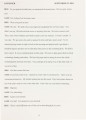
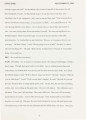
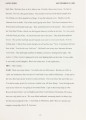
Show MLI ER p B R 2 , 2 04 b cause th y had moved the school there for the winter. It was good flying c nditi n . While I was there I applied for officer candidate school and was accepted. When w g t out of officer candidate school we graduated in April, we were sent up to Atlantic City. We lived in hotels then. You know, the government took over a lot of big hotels in those days. That's where we lived. Robert Preston, when I was in OCS, he was in the upper class. BEC: Really? SAM: Yes. He was a ranking officer in the upper class. He wasn't a real officer but a cadet officer. He used to call the cadence on marches and all that. We had a parade every day, I think. Of course, Miami was blacked out then, during the war. It was about twenty hours a day that you were on the go. You had to study. We'd study in the bathroom. It was just a regular hotel room with two guys. They used the demerit system. That's the way they graded you. If you got too many demerits, you were washed out. That's the way they do it at West Point. One of my roommates, who was a Harvard graduate, washed out. He couldn't stand the pressure. It was too much pressure for him. But I had military experience before I went and I had advanced to tech sergeant. So I was a tech sergeant when I got my commission as a second lieutenant. BEC: Did you enjoy that? Did you enjoy OCS at all? SAM: (Laughs) Well, I think it was good for me. It was so structured. I mean everything happened down to the minute. It was well organized. We had some good instructors and good teachers. Well, at the time I wasn't enjoying it. The first six weeks of the school, you didn't get to go anywhere. You were in your room when you were off. Then when you got in the upper class, you'd get Saturday night until about four o'clock 15 |
| Reference URL |
https://collections.lib.utah.edu/ark:/87278/s6zk7fx6/1018365 |