| Title |
Franklin E. Walker, Salt Lake City, Utah: an interview by Benjamin Bahlmann, October 26, 2000: Saving the legacy tape no. 161 and 162 |
| Alternative Title |
Franklin E. Walker, Saving the legacy: an oral history of Utah's World War II veterans, ACCN 2070, American West Center, University of Utah |
| Creator |
Walker, Franklin E., 1921-2010 |
| Contributor |
Bahlmann, Benjamin; University of Utah. American West Center |
| Publisher |
Digitized by J. Willard Marriott Library, University of Utah |
| Date |
2000-10-26 |
| Date Digital |
2015-09-16 |
| Access Rights |
I acknowledge and agree that all information I obtain as a result of accessing any oral history provided by the University of Utah's Marriott Library shall be used only for historical or scholarly or academic research purposes, and not for commercial purposes. I understand that any other use of the materials is not authorized by the University of Utah and may exceed the scope of permission granted to the University of Utah by the interviewer or interviewee. I may request permission for other uses, in writing to Special Collections at the Marriott Library, which the University of Utah may choose grant, in its sole discretion. I agree to defend, indemnify and hold the University of Utah and its Marriott Library harmless for and against any actions or claims that relate to my improper use of materials provided by the University of Utah. |
| Spatial Coverage |
New Guinea; Australia; Indonesia; Philippines; Hawaii |
| Subject |
Walker, Franklin E., 1921-2010--Interviews; World War, 1939-1945--Personal narratives, American; Veterans--Utah--Biography; World War, 1939-1945--Aerial operations, American; World War, 1939-1945--Campaigns--Pacific Area--Personal narratives, American |
| Description |
Transcript (77 pages) of an interview by Benjamin Bahlmann with Franklin E. Walker on October 26, 2000. This is from tape numbers 161 and 162 in the "Saving the Legacy Oral History Project |
| Collection Number and Name |
Accn2070, Saving the Legacy oral history project, 2001-2010 |
| Abstract |
Walker (b. 1921) grew up in Salt Lake City and attended a civilian pilot training prior to volunteering for service in the Navy after Pearl Harbor. He recalls his experiences in New Guinea, Australia, Indonesia, and Hawaii. He also discusses his postwar years in Utah, Alaska, Massachusetts, Washington D.C., Illinois, and California. 77 pages. |
| Type |
Text |
| Genre |
oral histories (literary works) |
| Format |
application/pdf |
| Extent |
77 pages |
| Language |
eng |
| Rights |
 |
| Scanning Technician |
Mazi Rakhsha |
| Conversion Specifications |
Original scanned with Kirtas 2400 and saved as 400 ppi uncompressed TIFF. PDF generated by Adobe Acrobat Pro X for CONTENTdm display |
| ARK |
ark:/87278/s6xp9453 |
| Topic |
Personal narratives--American; Veterans; World War (1939-1945); Military operations, Aerial--American |
| Setname |
uum_slohp |
| ID |
1018164 |
| Reference URL |
https://collections.lib.utah.edu/ark:/87278/s6xp9453 |
| Title |
Page 36 |
| Format |
application/pdf |
| Setname |
uum_slohp |
| ID |
1018120 |
| OCR Text |
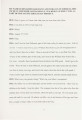
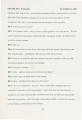
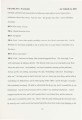
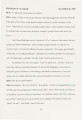
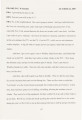
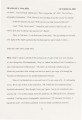
Show FRANKLIN E. WALKER 0 T B R 26 2000 FRA: No, not so much on that island. But of course all along New Guinea th n they were fighting and there was activity. The Marines were going up there and the rmy. There was a lot of military activity. And MacArthur's troops were going up along the bit island of New Guinea. BEN: So, how many were on your base then? Was it just your flight? FRA: As I remember, there were two squadrons and we traded off patrol areas. PBY squadrons. And there were fifteen planes, and I think eighteen crews in each squadron so it would be about two hundred men in each squadron, so it would be four hundred men, approximately, in the two squadrons. BEN: Okay. And what - I forgot - what did you think of life in the Pacific? Temperature-wise, climate-wise, was that ... FRA: Oh, it was not very pleasant. We used to go swimming a lot down in the bay there was a coral reef not too far from the shore. We would swim out there quite a bit when we had time. As I said though, when we were up there, we were flying night attack missions all of the time. Every third night we'd go out, and it was, as I said, fourteen to sixteen hours. I remember one flight was sixteen point six hours - and when you'd come back; you were supposed to sleep during the day time. We were on sea plane tenders there. Excuse me. A little later, we moved up on sea plane tenders after we left Woendi. Anyway, on the tenders during the day, they'd have guys chipping paint and making all kinds of noise, so you'd have a hard time sleeping during the day time, so that's where I was really needing sleep badly. 34 |
| Reference URL |
https://collections.lib.utah.edu/ark:/87278/s6xp9453/1018120 |