| Title |
John A. Lindquist, Ogden, Utah: an interview by Becky B. Lloyd, February 2, 2002: Saving the legacy tape no. 433 |
| Alternative Title |
John A. Lindquist, Saving the legacy: an oral history of Utah's World War II veterans, ACCN 2070, American West Center, University of Utah |
| Creator |
Lindquist, John A., 1919-2013 |
| Contributor |
Lloyd, Becky B.; University of Utah. American West Center |
| Publisher |
Digitized by J. Willard Marriott Library, University of Utah |
| Date |
2002-02-05 |
| Date Digital |
2015-09-16 |
| Access Rights |
I acknowledge and agree that all information I obtain as a result of accessing any oral history provided by the University of Utah's Marriott Library shall be used only for historical or scholarly or academic research purposes, and not for commercial purposes. I understand that any other use of the materials is not authorized by the University of Utah and may exceed the scope of permission granted to the University of Utah by the interviewer or interviewee. I may request permission for other uses, in writing to Special Collections at the Marriott Library, which the University of Utah may choose grant, in its sole discretion. I agree to defend, indemnify and hold the University of Utah and its Marriott Library harmless for and against any actions or claims that relate to my improper use of materials provided by the University of Utah. |
| Spatial Coverage |
France; Germany; Ogden, Weber County, Utah, United States |
| Subject |
Lindquist, John A., 1919-2013--Interviews; World War, 1939-1945--Personal narratives, American; World War, 1939-1945--Aerial operations, American; World War, 1939-1945--Campaigns--Europe, Northern--Personal narratives, American; World War, 1939-1945--Campaigns--France--Normandy--Personal narratives, American; Veterans--Utah--Biography |
| Keywords |
D-Day |
| Description |
Transcript (36 pages) of an interview by Becky B. Lloyd with John A. Lindquist on February 5, 2001. This is from tape number 433 in the "Saving the Legacy Oral History Project |
| Collection Number and Name |
Accn2070, Saving the Legacy oral history project, 2001-2010 |
| Abstract |
John Lindquist (b.1919) discusses growing up in Ogden, Utah during the depression, helping to run the family mortuary. After being drafted into the Army, he served as a surgical technician, and then entered pilot training. He flew his first combat mission on D-Day as a bombardier-navigator. He retired from the Air Force Reserve in 1962 at the rank of Major. 36 pages. |
| Type |
Text |
| Genre |
oral histories (literary works) |
| Format |
application/pdf |
| Extent |
36 pages |
| Language |
eng |
| Rights |
 |
| Scanning Technician |
Mazi Rakhsha |
| Conversion Specifications |
Original scanned with Kirtas 2400 and saved as 400 ppi uncompressed TIFF. PDF generated by Adobe Acrobat Pro X for CONTENTdm display |
| ARK |
ark:/87278/s66t2kxj |
| Topic |
Personal narratives--American; Veterans; World War (1939-1945); Military operations, Aerial--American |
| Setname |
uum_slohp |
| ID |
1017842 |
| Reference URL |
https://collections.lib.utah.edu/ark:/87278/s66t2kxj |
| Title |
Page 20 |
| Format |
application/pdf |
| Setname |
uum_slohp |
| ID |
1017821 |
| OCR Text |
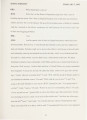
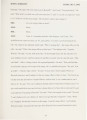
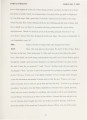
Show JOH LI DQ I T EBR I Y 5 2002 L ill L ui iana, n ar an1p P lk, and I r p rt din th rea , a "c ual". fe ll \ int r iewed m and asked 1ne why I was there and I aid I wa \ aiti ng t g in th cadet and they were backlogged for severaltn nths at that tim . rk with a aptain Geiss, who was a cancer specialist in private practice, but h wa a ign d t the appendectomy tent. And they were very short-handed of pers01mel. o I start d right out without any formal training as a surgical technician and I would run the autoclave to sterilize the instruments and after I got acquainted with Captain Geiss a little bit he said, "You know enough to help 1ne in the tent." So I would prep the patients as they can1e in. I would shave them and paint them with iodine and get them ready for Captain Geiss, who would take out their appendix. And about fifty percent of those that came in to this MASH unit were gold bricks from the i 11 Annored Division. They wanted a day off so they go on sick call. And if they cmnplained that they had a bellyache, they were immediately sent to our MASH unit to give us training. And on a busy day we would probably take out ten appendix. And half of them didn't have an appendix. I mean, it was normal; it wasn't inflmned (laughs). But they got their appendix ren1oved anyway. The Army's theory was if you say you're sick, you're sick. But if you say you've got a sore appendix it's con1ing out whether you' re sick or not, because the next ti1ne if it ever gets sore you rna y not be where you can get to a doctor. So Captain Geiss and I worked as a tean1 of two. I'd prep the patient and he would remove the appendix and tie off the stump and then he would go to the next patient. They were all on gurneys, a litter stretcher, and they're trying to simulate actual combat conditions. And I would sew the guy up that had just had his appendix out and we just had a routine. I'd prep three or four and we'd take out their appendix, I'd sew them up and Captain Geiss would- about half of them or 16 |
| Reference URL |
https://collections.lib.utah.edu/ark:/87278/s66t2kxj/1017821 |