| Title |
Frank Johnson, Salt Lake City, Utah: an interview by Becky B. Lloyd, January 22, 2002: Saving the legacy tape no. 422 |
| Alternative Title |
Frank Johnson, Saving the legacy: an oral history of Utah's World War II veterans, ACCN 2070, American West Center, University of Utah |
| Creator |
Johnson, Frank, 1917-2003 |
| Contributor |
Lloyd, Becky B.; University of Utah. American West Center |
| Publisher |
Digitized by J. Willard Marriott Library, University of Utah |
| Date |
2002-01-22 |
| Date Digital |
2015-09-16 |
| Access Rights |
I acknowledge and agree that all information I obtain as a result of accessing any oral history provided by the University of Utah's Marriott Library shall be used only for historical or scholarly or academic research purposes, and not for commercial purposes. I understand that any other use of the materials is not authorized by the University of Utah and may exceed the scope of permission granted to the University of Utah by the interviewer or interviewee. I may request permission for other uses, in writing to Special Collections at the Marriott Library, which the University of Utah may choose grant, in its sole discretion. I agree to defend, indemnify and hold the University of Utah and its Marriott Library harmless for and against any actions or claims that relate to my improper use of materials provided by the University of Utah. |
| Spatial Coverage |
Seattle, King County, Washington, United States; Ketchikan, Alaska, United States; Boston, Suffolk County, Massachusetts, United States |
| Subject |
Johnson, Frank, 1917-2003--Interviews; World War, 1939-1945--Personal narratives, American; United States. Coast Guard--History--World War, 1939-1945; Veterans--Utah--Biography |
| Description |
Transcript (38 pages) of an interview by Becky B. Lloyd with Frank Johnson on January 22, 2001. This is from tape number 422 in the "Saving the Legacy Oral History Project |
| Collection Number and Name |
Accn2070, Saving the Legacy oral history project, 2001-2010 |
| Abstract |
Frank Johnson (b.1917) enlisted in the U.S. Coast Guard in 1939, three days before Hitler invaded Poland. He was stationed in Seattle when the Japanese bombed the fleet at Pearl Harbor and was later transferred to Boston. He finished his service time in Ketchikan, Alaska. 38 pages. |
| Type |
Text |
| Genre |
oral histories (literary works) |
| Format |
application/pdf |
| Extent |
38 pages |
| Language |
eng |
| Rights |
 |
| Scanning Technician |
Mazi Rakhsha |
| Conversion Specifications |
Original scanned with Kirtas 2400 and saved as 400 ppi uncompressed TIFF. PDF generated by Adobe Acrobat Pro X for CONTENTdm display |
| ARK |
ark:/87278/s6418w9x |
| Topic |
Personal narratives--American; Veterans; World War (1939-1945) |
| Setname |
uum_slohp |
| ID |
1017629 |
| Reference URL |
https://collections.lib.utah.edu/ark:/87278/s6418w9x |
| Title |
Page 14 |
| Format |
application/pdf |
| Setname |
uum_slohp |
| ID |
1017603 |
| OCR Text |
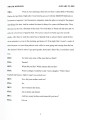
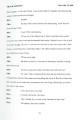
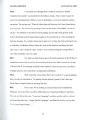
Show FRANK JOHNSON JANUARY 22, 2002 also a chance to take an examination for the next higher rate, which I was able to pass. That made me a second-class boatswain mate. Well, at the time, before I went in the service, I had a real steady girlfriend, real sweetheart of a gal. And I kept writing to her telling her about all the job opportunities and everything there was in Seattle. She'd been a schoolteacher, teaching typing and bookkeeping in a high school in Salina, and from there she got a job at the state hospital in Provo doing secretarial work and things like that. So she and two of her girlfriends came to Seattle, and they were all able to find work immediately. The country was just crying for help. Women were helping to build ships as welders and everything like that. But she got a job at the army ordnance doing secretarial work. She was up there eighteen months and we decided to get married. I must have caught her at one of her weak moments or something. But we were able to finagle a tenday leave of absence and we came home, and they had a short reception at my folks' place and a dance down at her folks' place in Aurora. Well, I'm not much of a dancer; I'm a much better intermissioner than a dancer. So after that we went back to Seattle. Then from Seattle I was sent back to Baltimore, Maryland, to go through police training and then they extended that schooling to become a fireman. So I've been given training both in police work and in firefighting. Then we were sent to another schooling to take training on LCVPs-landing craft. So I thought, boy, South Pacific here I come. But instead I was sent back to Everett, Washington, and we were overseeing the loading of explosives on all of the foreign ships. Sometimes sixty, eighty-five thousand ton on a ship. It's quite hazardous work if one of them had blown up, which they never did. They used to tell us in case of an explosion, you'd have ten seconds to get off the ship (laughs). So that didn't give you much time. 13 |
| Reference URL |
https://collections.lib.utah.edu/ark:/87278/s6418w9x/1017603 |